


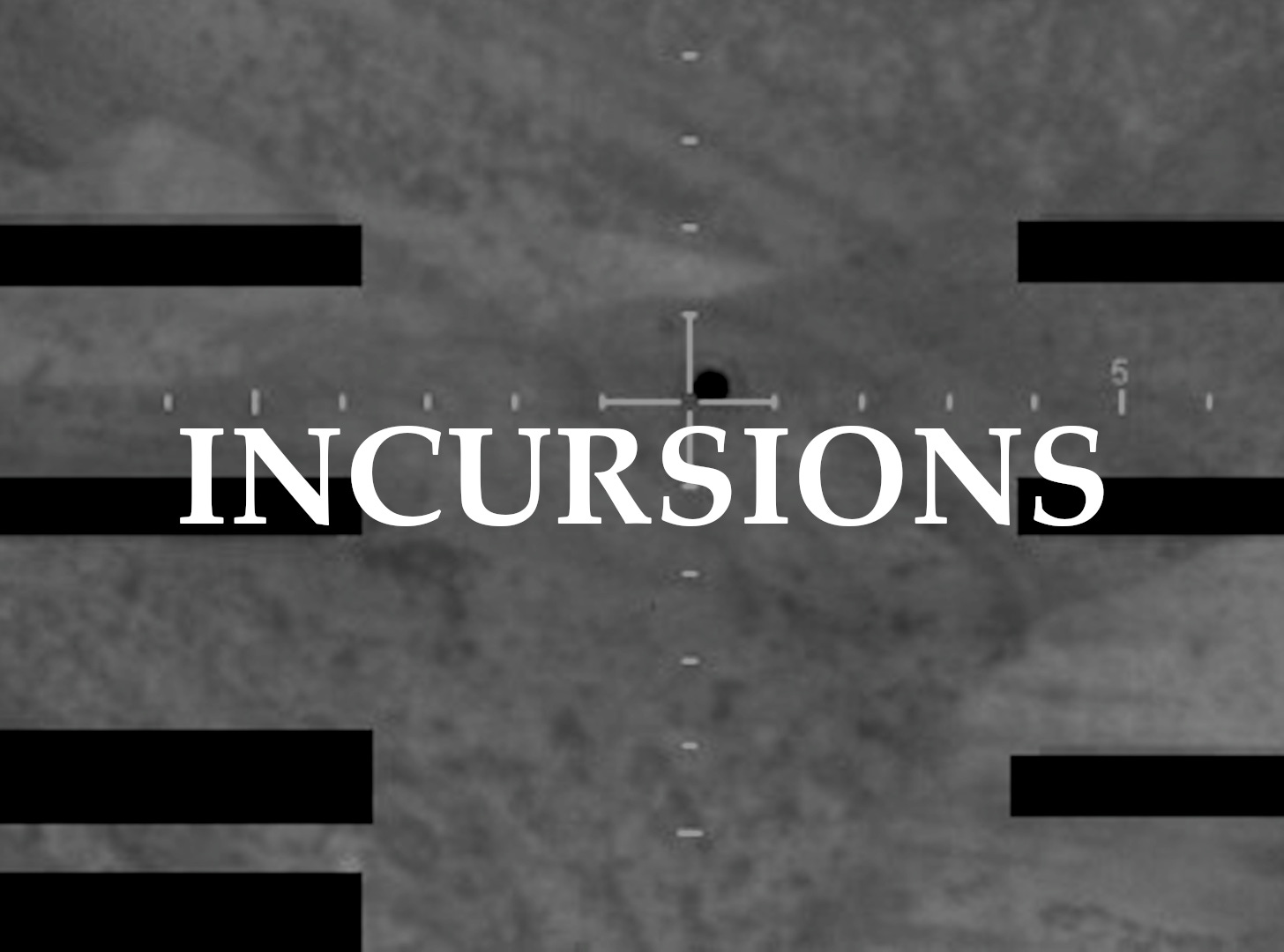
The document is titled ‘ODNI-UAP-D001’. It contains no imagery, radar readings or analysis. Written in May 2026 by an officer on active duty, it concerns events dating to late 2025. Therefore, six months elapsed between the event and its recording in writing. The author remains anonymous, and the reference to USPER in the file name indicates the redaction policy applied to US nationals.
Upon its release, the text recounts a night of close encounters involving orange orbs just metres from a helicopter and luminous formations trailing fighter jets. However, this account has a counterpart, and that is where the story becomes interesting.

One night at a testing range
In the early evening, while it was still light, the officer took off from a Joint Operations Centre with a colleague and two pilots. Their mission was to investigate the muffled explosions that had been heard in the mountains of the firing range on previous nights, which had coincided with reports of unidentified aerial phenomena (UAP). They were searching for debris – anything that might explain the orbs.
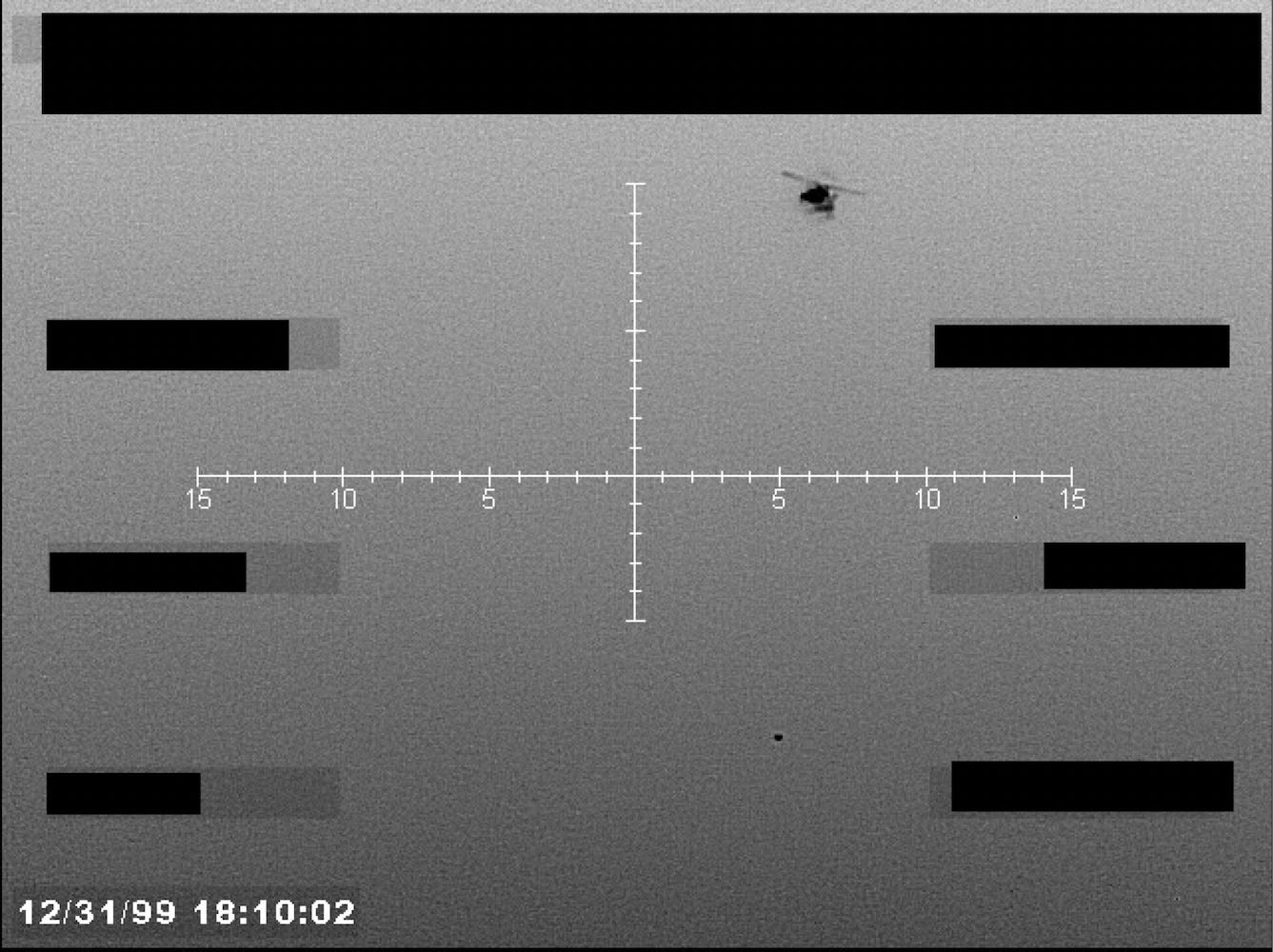
For several hours, the helicopter flew at a very low altitude along the mountain range. Each time they spotted debris on the ground, it turned out to be the remains of rockets accumulated over years of weapons testing. As they flew past, the crew noted the entrance to a large cavity, the bottom of which they could not see; they recorded its position and continued.
After dropping off and refuelling, just as they were planning to return, the operations centre reported radar echoes in the same area where the activity had been observed. The crew changed course. What followed took over an hour.
The witness describes four incidents. First, a ‘super-hot’ object was spotted on the FLIR by a ground crew. This object then split in two before disappearing. Second, a swarm of countless orange spheres against a mountainous backdrop. Two large orbs lighting up near the rotor and being joined by others in a vertical formation for ten to fifteen seconds before fading in reverse order. Orbs lighting up above fighter jets in flight and matching their speed and trajectory several times right up until landing.
The account ends with the pilots being ‘virtually speechless’ and a brief debriefing before they head home.
Taken in isolation, this is an eyewitness account. It is a meticulous account: the narrator consistently specifies who sees what and through which channel. He himself observes with the naked eye. The pilots use NVGs and FLIR. The ground crew communicate by radio.
The narrator maintains this hierarchy of sources from start to finish, and credit must be given where it is due. The most spectacular elements of the first episode — the ascent from the ground, the approach to within three metres and the passage beneath the aircraft — are explicitly attributed to the radio, while the narrator himself expresses doubts about what he saw.
The account is interesting, but the problem lies elsewhere.

The classified counterpart
On 8 May 2026, the first instalment of the PURSUE programme already included this case. In a different form.
It was a three-page document marked ‘SECRET//NOFORN’ at the top and bottom of each page and entitled ‘USPER Statement about UAP Sighting’. It is not an account. Rather, it is a chronological log, timestamped to the minute, of the type produced in a federal investigative report. It covers the same mission, helicopter and witness. It has also been freely available on war.gov since its publication.
When the two texts are compared side by side, the difference is striking: the classified report is more cautious, precise and comprehensive than the version intended for publication. Whenever the two versions differ, it is the public version that oversimplifies matters.
The first example concerns the central scene of the first episode. The published account states: ‘The pilots observed it through NVGs and saw it split into two, with a smaller object emerging before it accelerated out of sight.’ The pilots saw the object split.
The report describes the same moment as follows: Having arrived on the scene, the helicopter searched the area using FLIR, NVGs and the naked eye, but did not locate the orb. It found nothing. It was the ground observation post that tracked the object and described it by radio. Then, one sentence later, the report states that the co-pilot had reported seeing something emerge from the two objects under NVG. The co-pilot. A single man reporting an observation that the rest of the crew had not made in an aircraft that had just failed to locate the target.
In the official report, the failure to locate the object has disappeared and the co-pilot has become ‘the pilots’. Nobody lied: the co-pilot’s observation is real. However, its evidential value has changed as the document has changed.
The second example is even more telling. At 22:33, the official report identifies a formation of orbs to the east, moving towards a neighbouring town whose name has been redacted. At 22:52, it places five or six of the orbs above a village. However, the published account places the entire event above the mountains and the firing range. The nearby residential area has vanished.
The public version of the account omits precisely what would make the matter political.
These two discrepancies are not isolated. The same pattern is evident in relation to the purpose of the mission, the distance of twenty miles, the existence of footage, and the fighter jets. In each case, three versions coexist: the report, the account and the public’s perception.
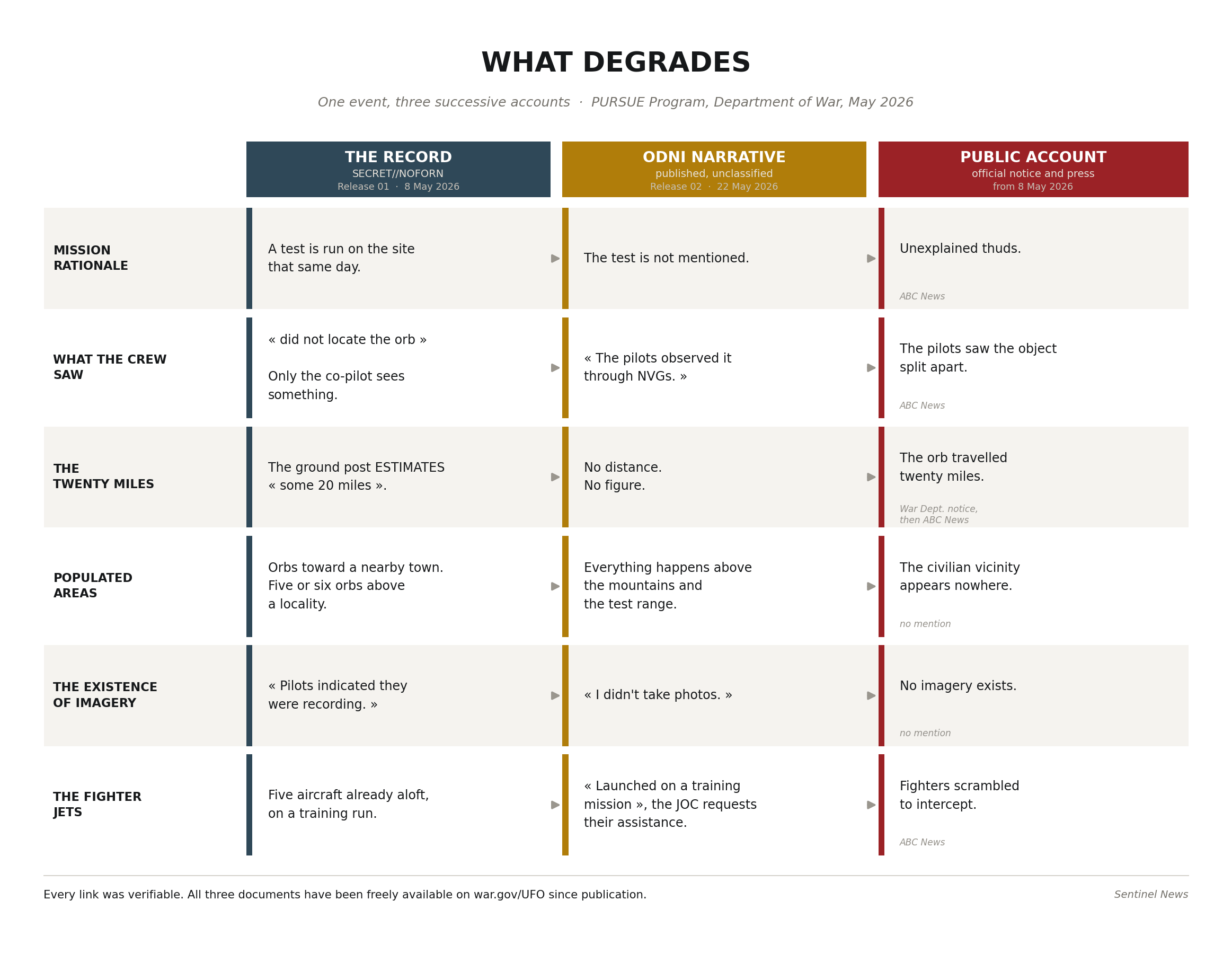
One event, three accounts. On the left is the SECRET//NOFORN-classified official report, published on 8 May 2026. In the centre is the testimony submitted on 22 May. On the right is what was retained in the official statement and subsequently by the press. All documents are freely available at war.gov/UFO.
A few clarifications on these lines are in order, because they deserve it.
The twenty miles, which are repeated everywhere as proof of an unattainable speed, are, in the report, a visual estimate relayed by radio from a ground observation post. The published account does not mention them at all; the witness only writes, ‘We briefly pursued it, but broke off, unable to match its speed’. It was the official note accompanying the file that reintroduced the figure, and it was the press that turned it into a fact.
Next is the test. The report notes that, earlier that same day, an office — the name of which has been redacted — carried out a test at the site. The nature of this test has also been redacted. We do not claim that it explains the explosions that prompted the mission. However, we acknowledge that readers of the minutes may ask this question, whereas readers of the published account cannot, as the test is not mentioned there.
Finally, the images. The published account simply states: ‘I didn’t take photos.’ This is accurate, but very incomplete. In his comments at the end of the transcript, however, the same witness reports that the pilots said they were recording. He adds that many of the sightings were above the helicopter and therefore outside the field of view of the FLIR camera. Therefore, there is video footage from that night. However, it has not been published and the account makes no mention of its existence.
As for the fighter jets, the press reported that they were scrambled to intercept the objects. Both documents say the same thing: five aircraft were already in the air on a training mission and the operations centre requested their assistance. A training flight became an interception. It’s just semantics. It transforms an incident into an emergency military response.
Thirty-two images, no source
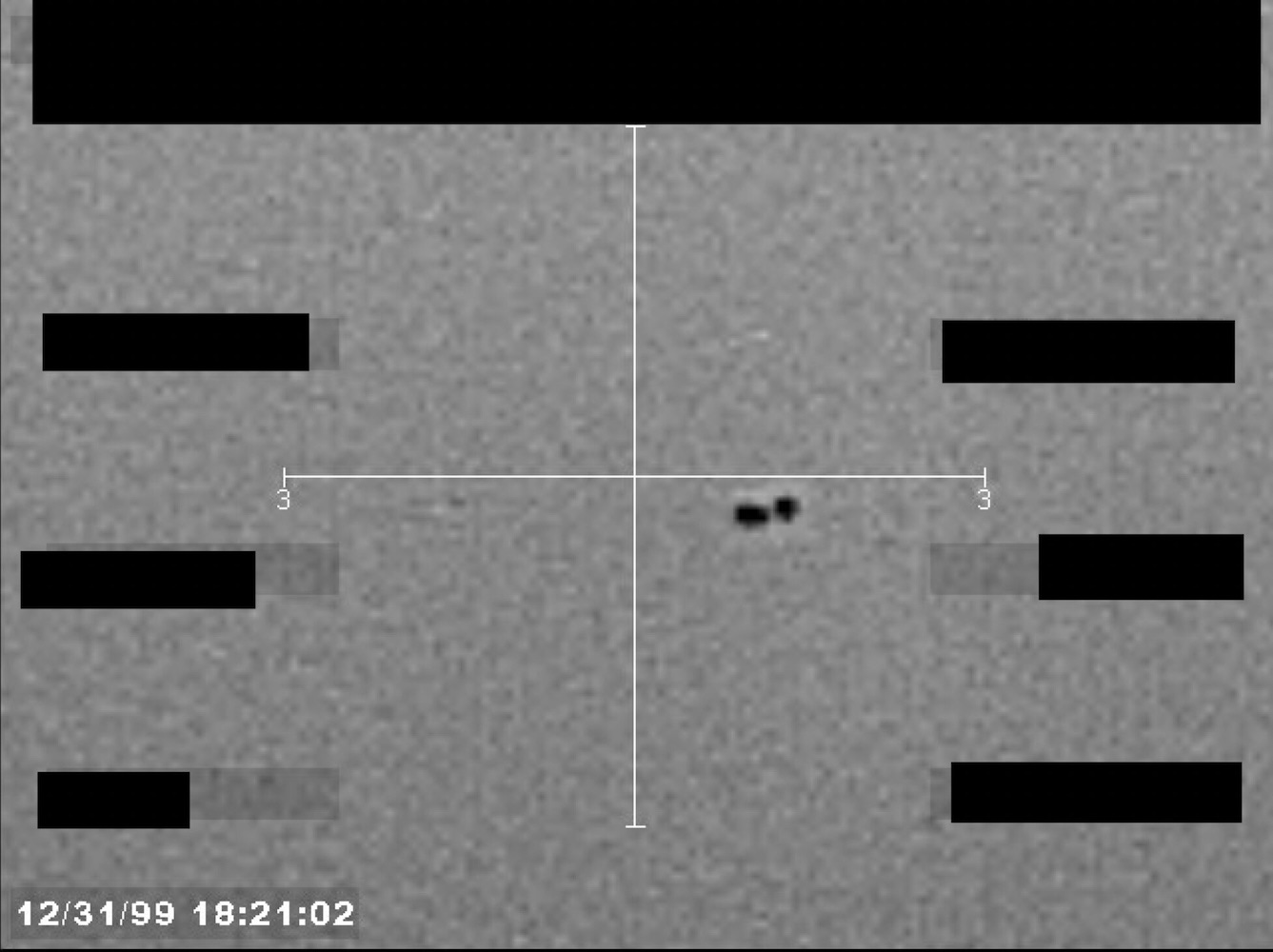
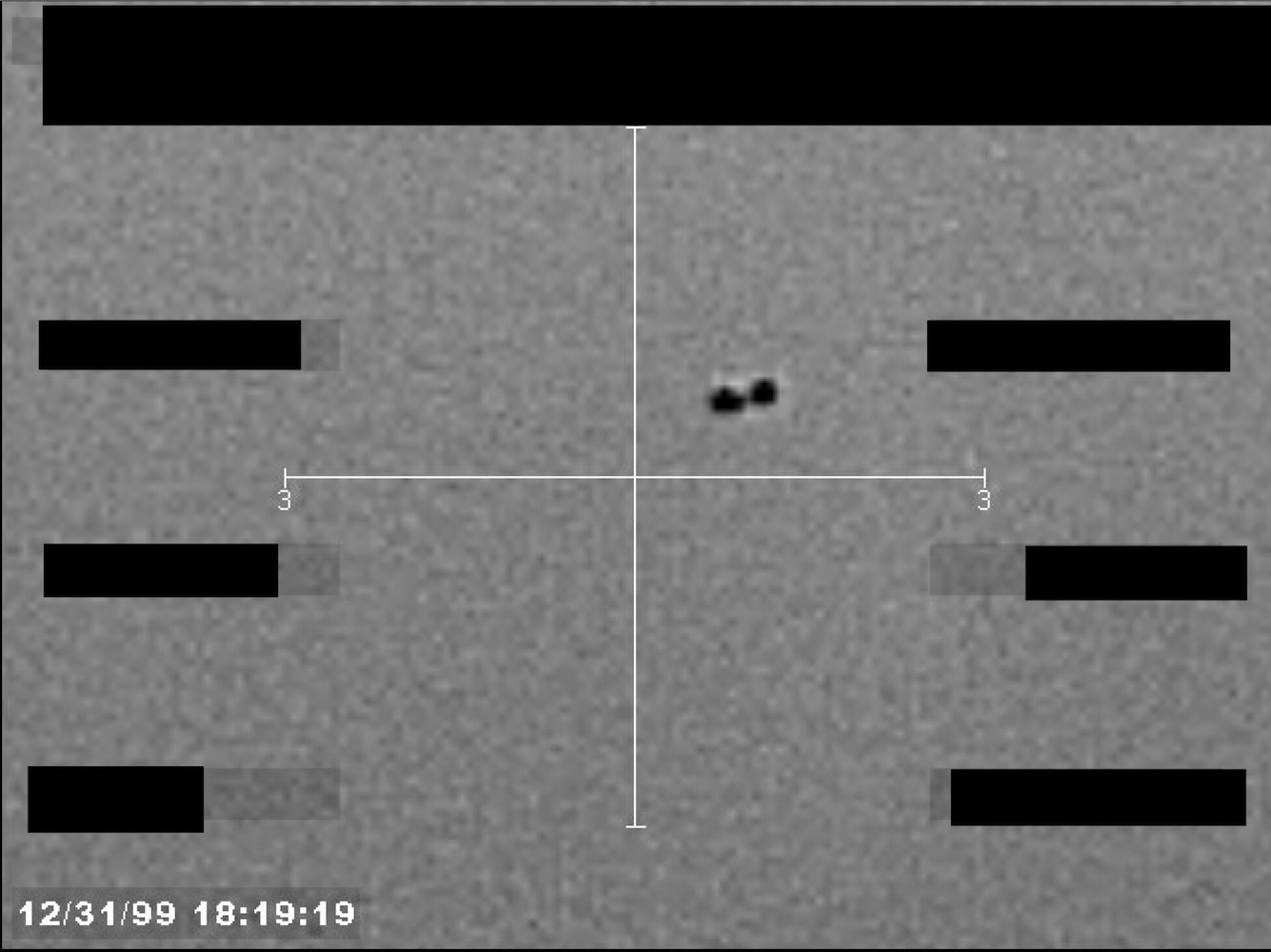
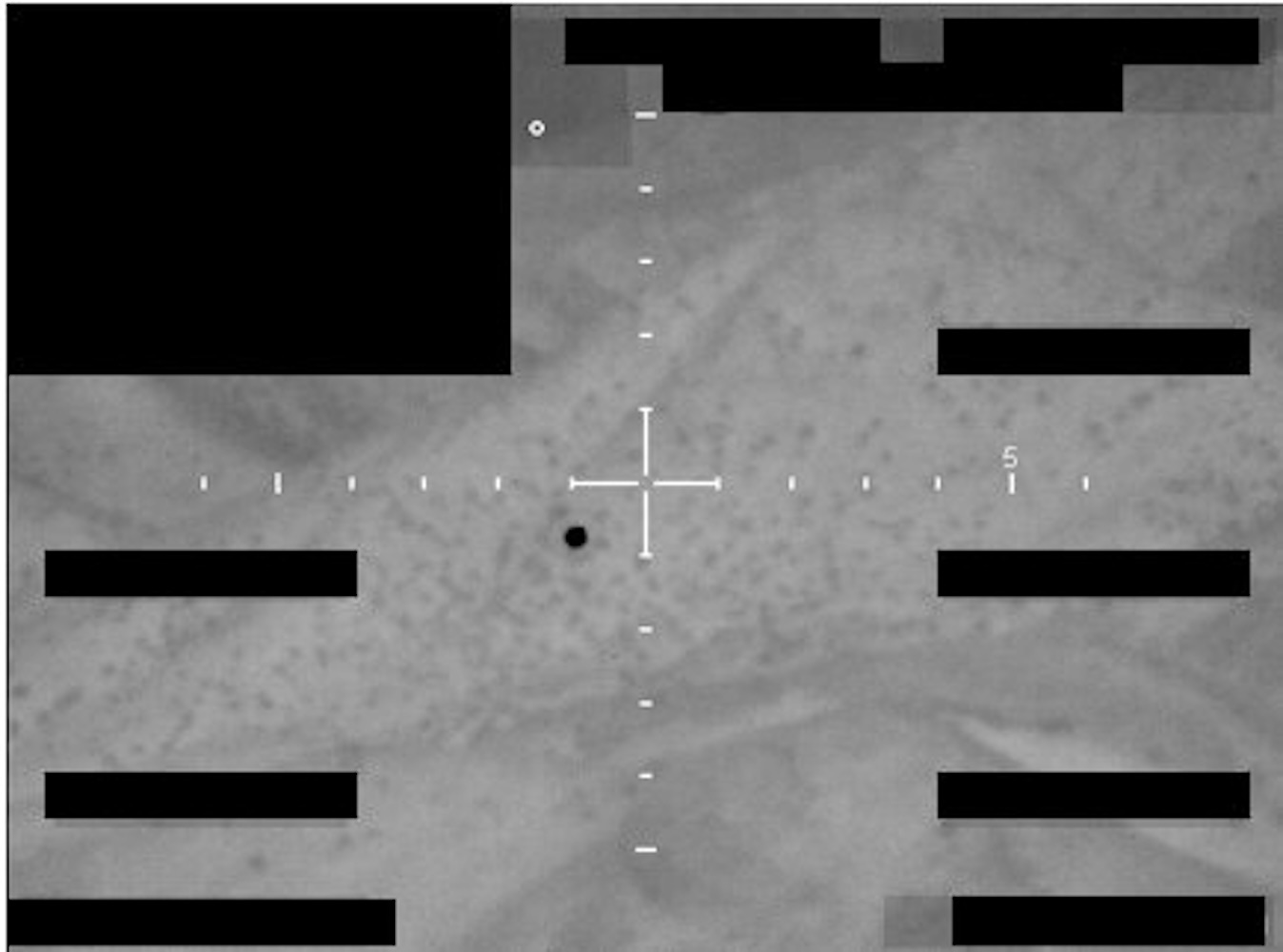
That leaves the imagery. The PURSUE file contains thirty-two infrared sensor photographs, divided into two series and published as early as 8 May. These photographs are generally presented as documenting the event.
However, none of them contain any metadata regarding their origin. The only available date is that embedded in the image by the sensor itself. For the twenty-four images in the main series, this shows 31 December 1999.
This is not a date. It is the factory default setting of an unset clock.
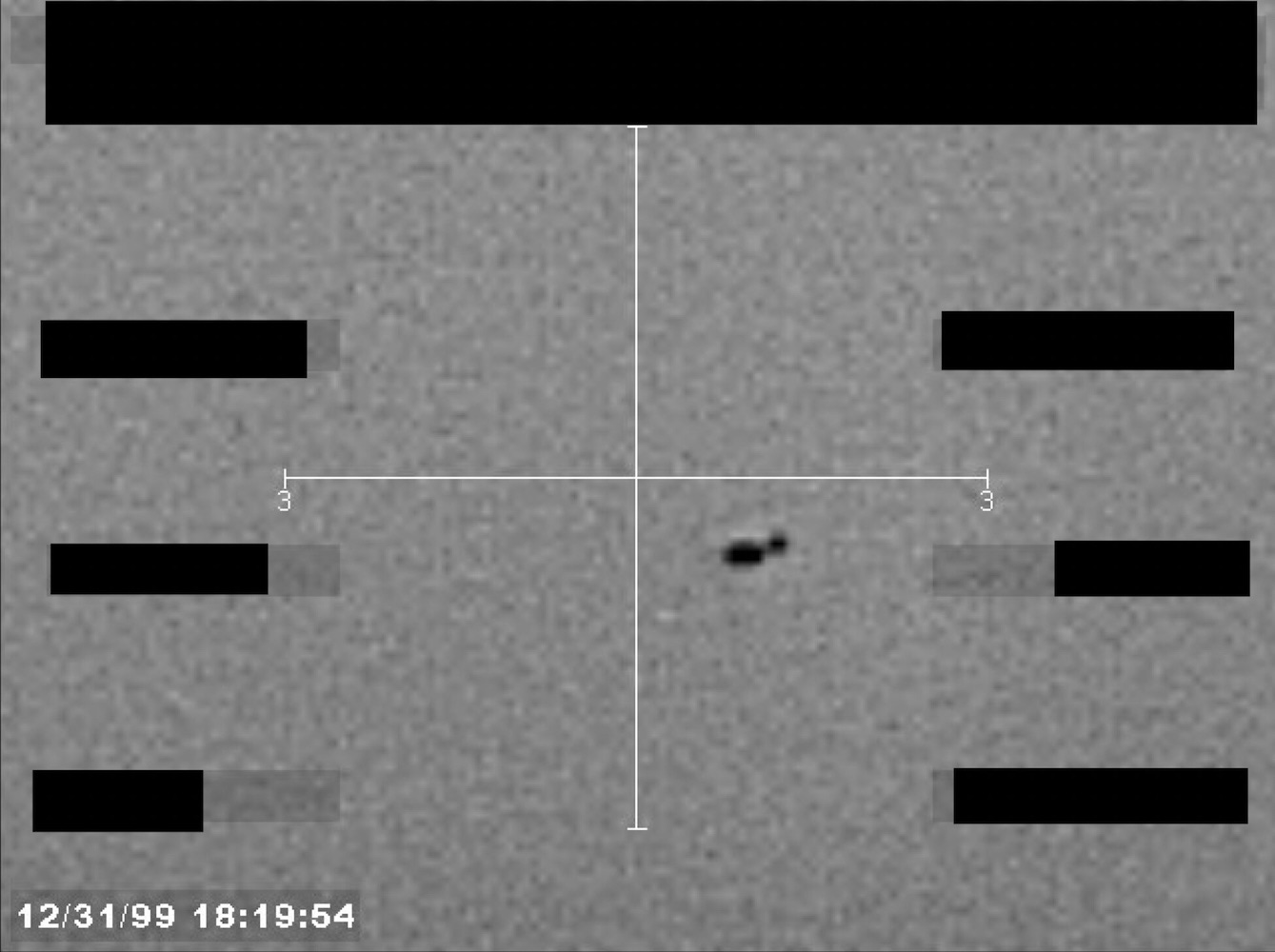
However, the embedded times are consistent: a continuous sequence of eleven minutes from 18:10:00 to 18:21:02. There is, in fact, something instructive to be seen here. Up until 18:19:06, the reticle displays a wide field of view and the images show virtually nothing. At 18:19:19, the operator narrows the field of view and two dark objects appear in sharp focus near the crosshairs. In thermal imaging, this phenomenon is known as ‘black-hot’: the hotter an object is, the darker it appears.
With a sensor set in this way, very dark objects are very hot objects. This is consistent with the ‘super-hot’ mentioned in the report.
Therefore, the sequence appears to be an observation post acquiring and zooming in on a target.
However, a government body that publishes imagery devoid of any provenance data, with a timestamp showing 1999, and without captions linking the files to the narrative they are supposed to illustrate, is producing material that can be interpreted as anyone sees fit. That is what happened here.
What remains once everything has been stripped away
At this point, the reader might conclude that nothing remains. That everything dissolves into the estimates of a ground-based observation post, the inaccuracies of a report, and the carelessness of a news dispatch. However, this would be jumping to conclusions. Conversely, it would be to commit the very error we have just documented: substituting one’s preferred narrative for the actual record.
Certain observations run through all three versions without a single word being changed.
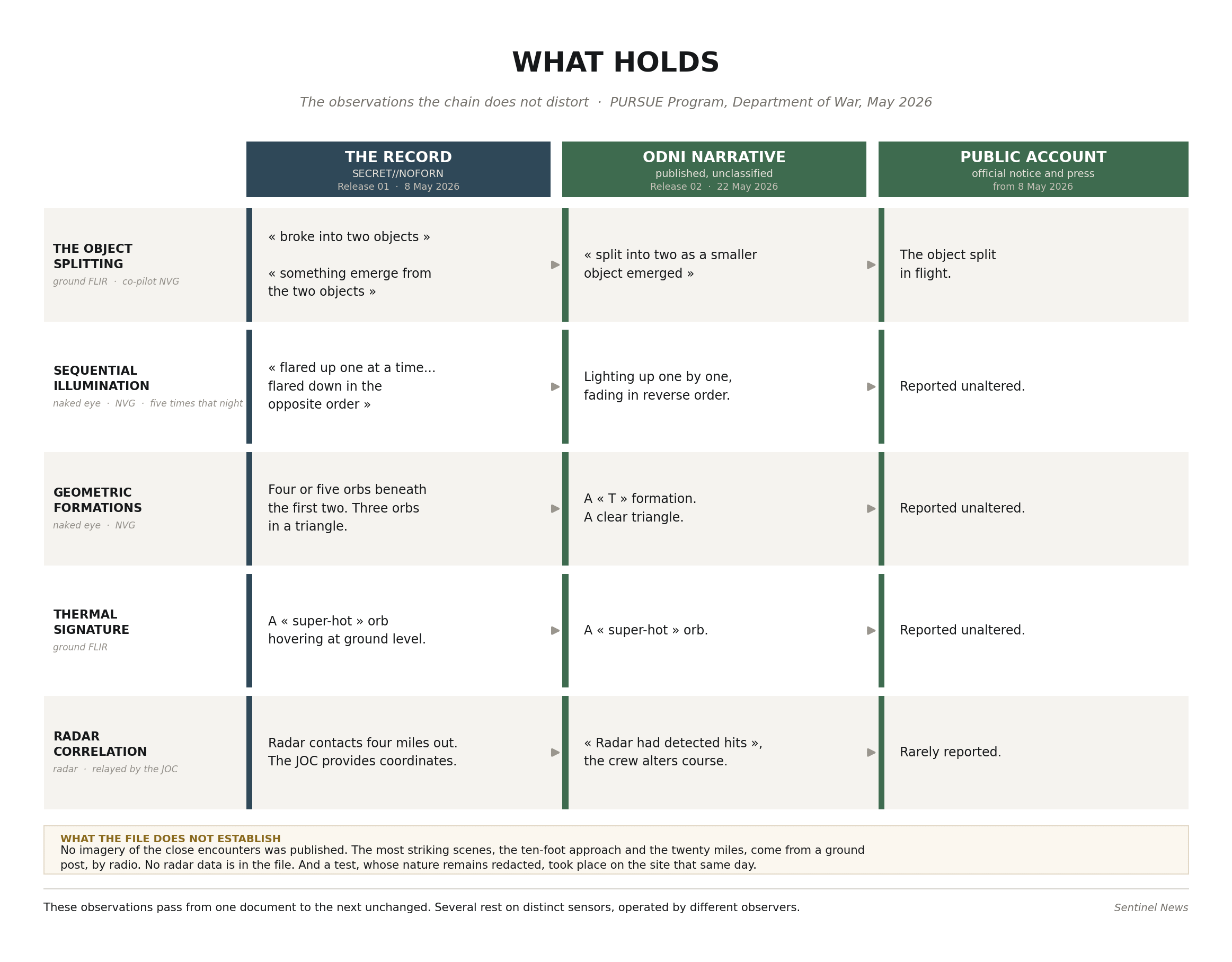
The chain of transmission does not distort them. These observations are reproduced identically in the official report, the published testimony and the press. Several are based on independent sensors.
The splitting of the object is confirmed twice, via two channels: the FLIR from the ground station and the co-pilot’s NVGs. The sequential lighting up and subsequent extinguishing of the orbs in reverse order was observed five times during the night, both with the naked eye and through binoculars. This was described in identical terms in both documents. The geometric formations and thermal signature did not change during the flight.
However, these observations prove nothing regarding the nature of the objects. The file contains no usable radar data, images of the close encounters or any analysis. The All-domain Anomaly Resolution Office maintains that there is no evidence to suggest an extraterrestrial origin, while acknowledging that many cases remain unresolved. Sean Kirkpatrick, its former director, deemed the first batch of PURSUE data to be unremarkable and predicted that, without analysis or context, it would merely fuel speculation.
On this point, he was right. However, not in the way he envisaged.
What this case really reveals
The raw testimony was cautious. The witness prioritised his sources, distinguishing between what he had seen and what had been reported to him. He also highlighted his own doubts regarding the sequence of events he remembered. The official report was even more so.
It is not the testimony itself that has been distorted. Rather, it is the layers surrounding it. For example, a published account reclassifies an individual observation as a crew observation and omits a test flight, a second aircraft and populated areas. It is a report that transforms a radio estimate into performance data. It is a news dispatch that invents a take-off in response to an alert.
None of this is a lie. Everything is online, and every link in the chain is verifiable. This is precisely what is most troubling: it took just fifteen days for the public record of a transparency programme to produce a narrative that no longer matches its own documents.
What remains after everything else has been stripped away is significant.
And no one has yet explained it.
These two sentences should be able to stand together. This is why this dossier deserves to be read rather than merely recounted.
However, this case raises a broader question. Witnesses describe an incursion into US airspace — particularly concerning above a military test site — with no successful interceptions.
Since 2018, the United States has faced challenges to the protection of its forces and strategic sites from advanced platforms whose capabilities raise questions. Could these be ‘blue-on-blue’ tests of American prototypes, pushing the limits of their conventional forces’ capabilities? Or are they attempts by China or Russia to destabilise public opinion in a geopolitical landscape undergoing reorganisation? Or are these craft of an even more mysterious origin?
Perhaps an examination of NASA’s documents will shed light on the matter. The director recently stated that the agency does indeed possess imagery and astronaut testimonies showing unidentified objects, which contradicts what the agency claimed just a few years ago.


