


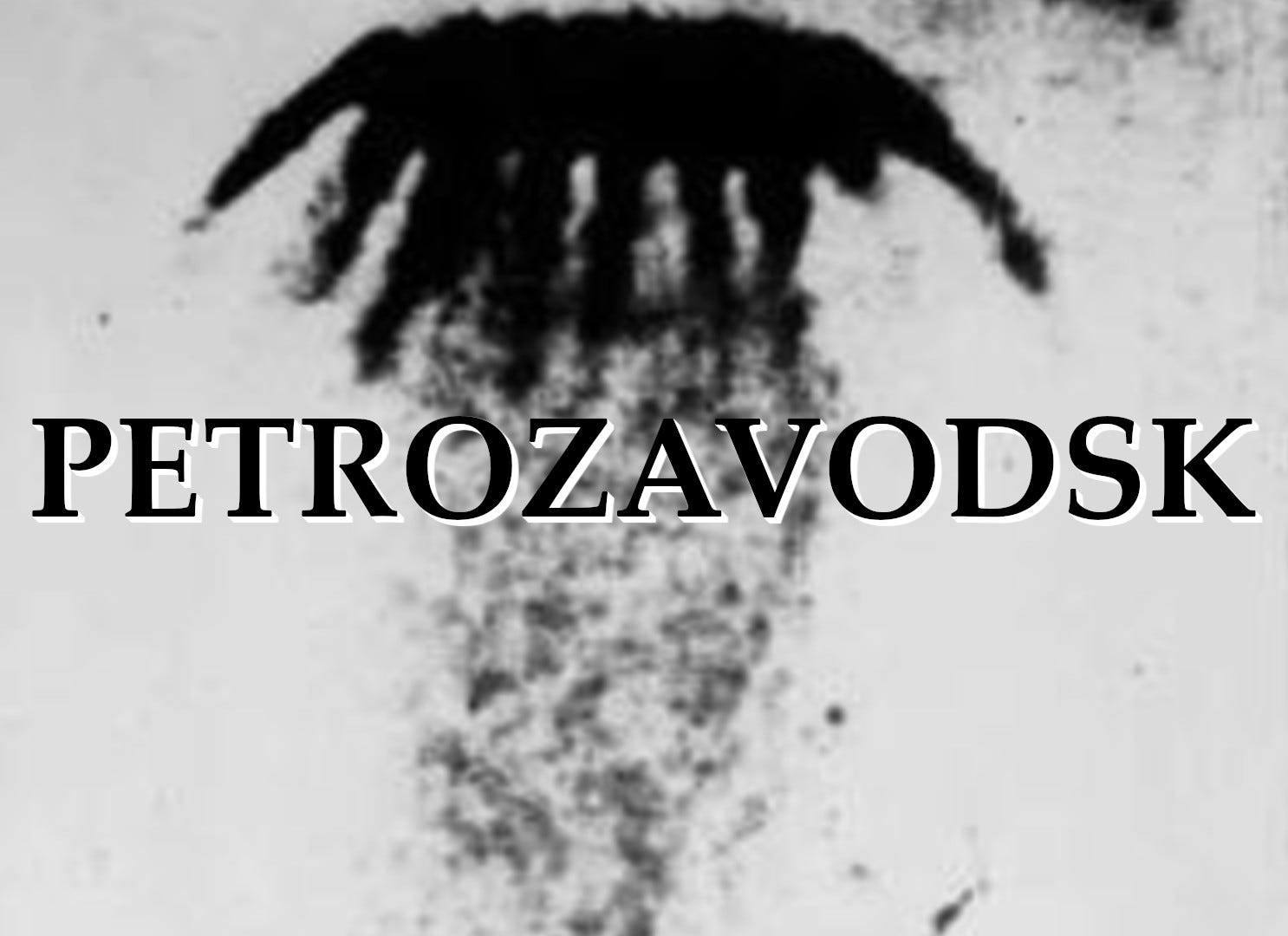
Contrary to popular belief, the Petrozavodsk incident did not start on 20 September 1977. In fact, it had quietly begun in the weeks leading up to that date.
The Petrozavodsk affair is often presented as an isolated incident, but it is actually part of a more complex reality: a paradoxical history of surveillance and repression intertwined with discreet scientific curiosity about unexplained aerial phenomena in the Soviet Union. A recently published article in Pravda reveals that the USSR’s interest in sightings of flying objects was real, albeit managed in an opaque manner and often exploited for political ends (Platov et Sokolov, Vestnik RAN, vol. 70, n° 6, 2000, p. 509).
As early as the 1940s, the Soviet military had been closely monitoring aerial sightings, driven by concerns for national security and scientific curiosity. The astronomer Felix Zigel, regarded by many as the founding father of Russian ufology, devoted years to collecting eyewitness accounts of sightings. His data partly formed the corpus that Gindilis, Men’kov and Petrovskaya subjected to statistical analysis in 1979. However, when Platov contacted Zigel as part of the SETKA programme, their collaboration was short-lived. Once Zigel realised that the Academy’s scientists were not seeking to validate the exogenous hypothesis, he distanced himself (Platov and Sokolov, Vestnik RAN, 2000).
As early as the 1950s, military officers and engineers organised closed-door conferences on these phenomena, while the Academy of Sciences set up an informal group to process reports. Its own leaders later described this approach as ‘inadequate and ill-conceived’ (Platov and Sokolov, Vestnik RAN, 2000). Unlike the ‘transparency’ displayed by the United States with Project Blue Book, the Soviet approach was characterised by extreme secrecy: information was limited, reports were classified and public discussion was discouraged.
Viewed in this light, the Petrozavodsk case takes on a new dimension. While the official Soviet explanation was that the fallen objects were debris from Kosmos-955, their initial silence on the matter and downplaying of the incident may have been an attempt to conceal other potential explanations linked to secret military technologies. Therefore, the history of the USSR and unidentified aerial phenomena is a history of state secrecy, mutual suspicion and scientific curiosity stifled by the need to maintain an image of power and control. The Petrozavodsk case is therefore not just a mere accident, but a symptom of this complexity.
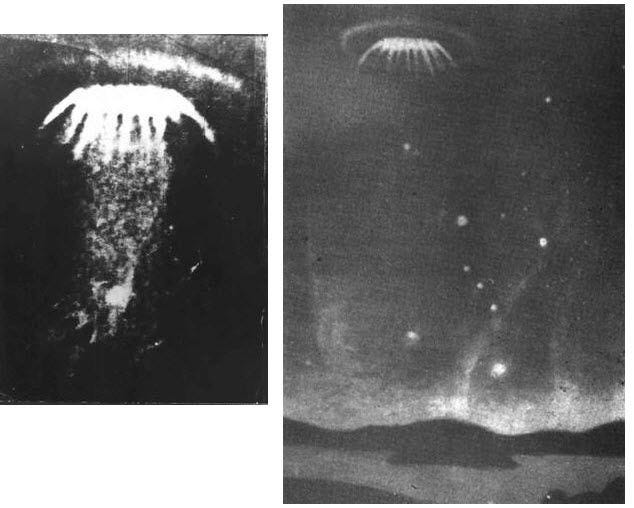
Contrary to popular belief, the Petrozavodsk incident did not begin on 20 September 1977. In fact, it began earlier and more quietly in the weeks leading up to that date.
From August onwards, residents of Karelia reported seeing unusual lights streaking across the night sky at high speed. The descriptions were similar: multiple points of light moving in formation and leaving trails that lingered for a few seconds before fading away. Some witnesses described a ‘shower of rays of light’ above the city. In several cases, these sightings were accompanied by sounds that could not be identified: whistling, muffled crackling and something between a muffled explosion and a distant clap of thunder. However, these preliminary reports were largely ignored by the authorities and lost in the mass of routine reports that the Soviet bureaucracy processed slowly.
What happened on the night of 11–12 September was different and far more tangible. The Soviet government initially remained completely silent. It was not until three days after the event that information made it past the censorship filter. On 23 September 1977, the newspaper Izvestiya published an article with the headline: ‘Unidentified natural phenomenon: the inhabitants of Petrozavodsk witnessed an extraordinary natural phenomenon’. According to the article, at around 4 am on 20 September, a huge ‘star’ appeared in the night sky, emitting beams of pulsating light towards the ground. The object then slowly moved towards Petrozavodsk, hovering over the city like a ‘huge jellyfish’ and illuminating the area with light beams described as resembling a shower of rain.
The Soviet government initially remained completely silent. Only under pressure from mounting reports and the publication in Izvestiya did an official explanation finally emerge: the debris found was said to be fragments of the Kosmos-955 satellite. This was a convenient explanation that was unverifiable for anyone without access to the launch archives and technical enough to discourage the general public’s curiosity.
The flaws in the official explanation: why Kosmos-955 is not enough
The story could have ended there. There was a rocket launch, a misidentified luminous plume and a population unaware of its own government’s military space activities. However, when Soviet researchers began to cross-check the accounts, something stood out.
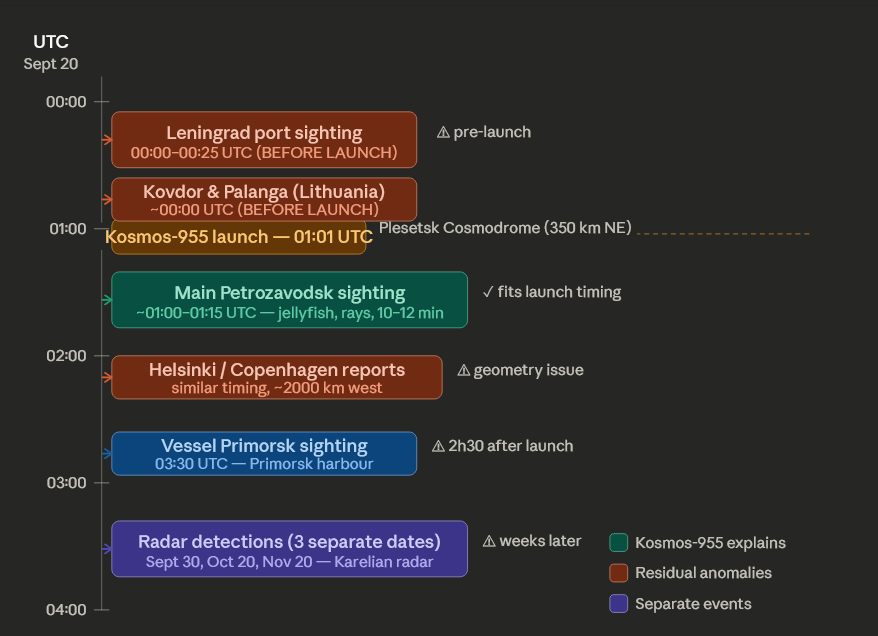
The first crack is embarrassing precisely because it comes from within. The January 1978 appendix to the Academy of Sciences’ report explicitly states that sightings were reported before the launch of Kosmos-955. For example, surveillance staff at the seaport of Leningrad reported theirs between 03:00 and 03:25 local time, i.e. one hour before the scheduled launch at 01:01 UTC. Similar reports were made in Medvezhyegorsk, Lukhi, Kovdor, and Palanga in Lithuania during the same time period (Gindilis, Men’kov, & Petrovskaya, 1979). Soviet witness accounts are notoriously unreliable. Many were written hours or days after the events, and this factor alone is sufficient to explain part of the discrepancy. Nevertheless, the fact that the contradiction was raised by the official investigators themselves lends it a status that cannot simply be dismissed.
Then there is the question of geometry. In his initial analysis, L. M. Gindilis noted that the westward movement of the unidentified object called into question the explanation involving Kosmos-955, given that that satellite had been launched in a north-easterly direction. An observation from the Sortavala hydrometeorological station, published in the Krasnoye Znamya newspaper on 8 October 1977, confirmed that the object was moving from north-east to south-west. While a plume trail does indeed drift with high-altitude winds, a movement that is clearly opposite to the launch direction cannot be fully accounted for by wind effects alone.
Gindilis also pointed out that, when considered alongside the expected distance and prolonged hovering above Leppäsyrjä, the observed angular dimensions presented further obstacles to the launch explanation. The ‘hanging’ in the sky described by numerous witnesses, whereby an object approached and then remained stationary for several minutes before moving off again, is physically incompatible with any known orbital trajectory. High-altitude rocket plumes can create convincing illusions of approach due to the effect of perspective, and their angular velocity can virtually stop: this is well documented. However, a five-minute standstill still defies rational modelling.
The geographical inconsistency of the reports as a whole must also be considered. The sightings were reported across a vast area, from Copenhagen and Helsinki in the west to Vladivostok in the east. It is physically impossible for a single plume at an altitude of 100 km, generated 350 km north-east of Petrozavodsk, to be visible simultaneously from Scandinavia and the Russian Far East. These are distinct events that have never been examined individually; they have been absorbed into the collective narrative of ‘the incident’ by the press and collective memory.
The key to resolving these contradictions may lie in Platov’s belated and little-noticed admission.
In a later article, Yuri Platov — a researcher at IZMIRAN (the Institute of Terrestrial Magnetism, Ionosphere and Radio Wave Propagation of the USSR Academy of Sciences), executive director of the SETKA-AN programme, and the main proponent of the Kosmos-955 explanation — notes that ‘a number of additional effects accompanying the Petrozavodsk phenomenon were associated with the failed launch of a ballistic missile, carried out in the same region at roughly the same time’ (Platov and Sokolov, Vestnik RAN, vol. 70, no. 6, 2000, p. 512). The hypothesis of two simultaneous launches from separately classified programmes resolves both the chronological anomalies and the geometric inconsistencies in one fell swoop. It also explains why no one within the Soviet apparatus was ever able to piece together the complete puzzle. Each department held only one piece.
The question of the ‘holes in the glass’ remains unanswered. Several residents claimed to have found microscopic fusion craters in their windows. However, no systematic physical investigation has ever been carried out into this alleged damage. The preliminary report by the Academy of Sciences concluded that it was impossible to satisfactorily explain the observed phenomenon based solely on visual observations. The atmosphere of secrecy surrounding the fact that a significant proportion of UFO sightings were linked to military launches, as maintained by the military and the KGB, created an overlap between scientific and esoteric discourse. The origin of these phenomena was simply ignored. The holes in the glass are the clearest illustration of this: when a population has no credible official explanation, it fabricates one — and a spectacular one at that.
The culprit was formally identified years later: The report of the first European conference on space debris (1993).
The main observation from Petrozavodsk is the well-documented phenomenon of a rocket plume, which was likely complicated by a second, classified test conducted simultaneously. Soviet officials were never able to publicly acknowledge this. From a sceptical perspective, what makes this case truly interesting is not the lights themselves, but the institutional cascade they triggered: the failure of compartmentalisation, the proliferation of legends during the information vacuum and, ultimately, a thirteen-year state programme on NEOs based on a misidentified satellite.
The most striking twist in this story is not the glowing jellyfish that was spotted over Karelia. Rather, it is the fact that the Proton upper stage of Kosmos-955, catalogued as debris 77-091B, nearly destroyed the Discovery shuttle fourteen years later. The 1993 European Space Debris Conference (Klinkrad, ESA/ESOC) highlighted that the near-collision of STS-48 with this object on 16 September 1991, at a distance of just 2.59 km, required an emergency manoeuvre of ΔV = 0.6 m/s, performed four and a half hours before the critical moment. This increased the pass distance to 14.8 km. The article confirms the mass and dimensions of 77-091B to be approximately 1,500 kg and 3.8 m × 2.6 m — a substantial piece of equipment rather than a mere fragment — which has been in a near-circular orbit at an altitude of around 540 km since 1977. Thanks to data-sharing agreements between NASA and the ESA — precisely the kind of international cooperation that the USSR had refused in 1977 — a disaster was averted.
The incident unfolded as follows: on the night of 20 September 1977, a Proton rocket was launched from Plesetsk; its upper stage produced a luminous plume that was mistaken for a UFO over Karelia. The Soviet government was unable to recognise the launch as classified and launched a thirteen-year investigation into UFOs. The upper stage remained classified as space debris for fourteen years and, in 1991, nearly caused the deaths of seven astronauts aboard Discovery.
The extraordinary explanation given for this unidentified aerial phenomenon (UAP) turned out to have truly dangerous consequences... but not the ones imagined in 1977.
Space jellyfish
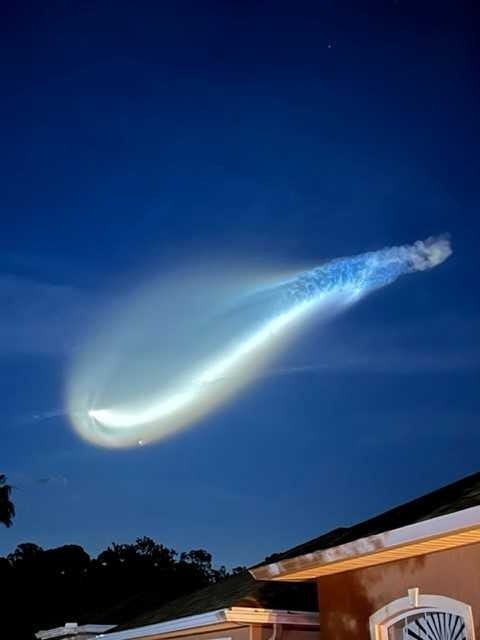
A space jellyfish is a phenomenon associated with rocket launches. It is caused by sunlight reflecting off the exhaust gases emitted at a high altitude during launches carried out at dusk or in the early morning. While the observer is in darkness, the exhaust plumes high in the sky remain exposed to direct sunlight. This luminous apparition resembles a jellyfish. Sightings of this phenomenon have caused panic and fuelled fears of nuclear missile strikes, leading to numerous reports of unidentified flying objects. In the case of Petrozavodsk, this is the most widely accepted explanation for the lights observed above the city.
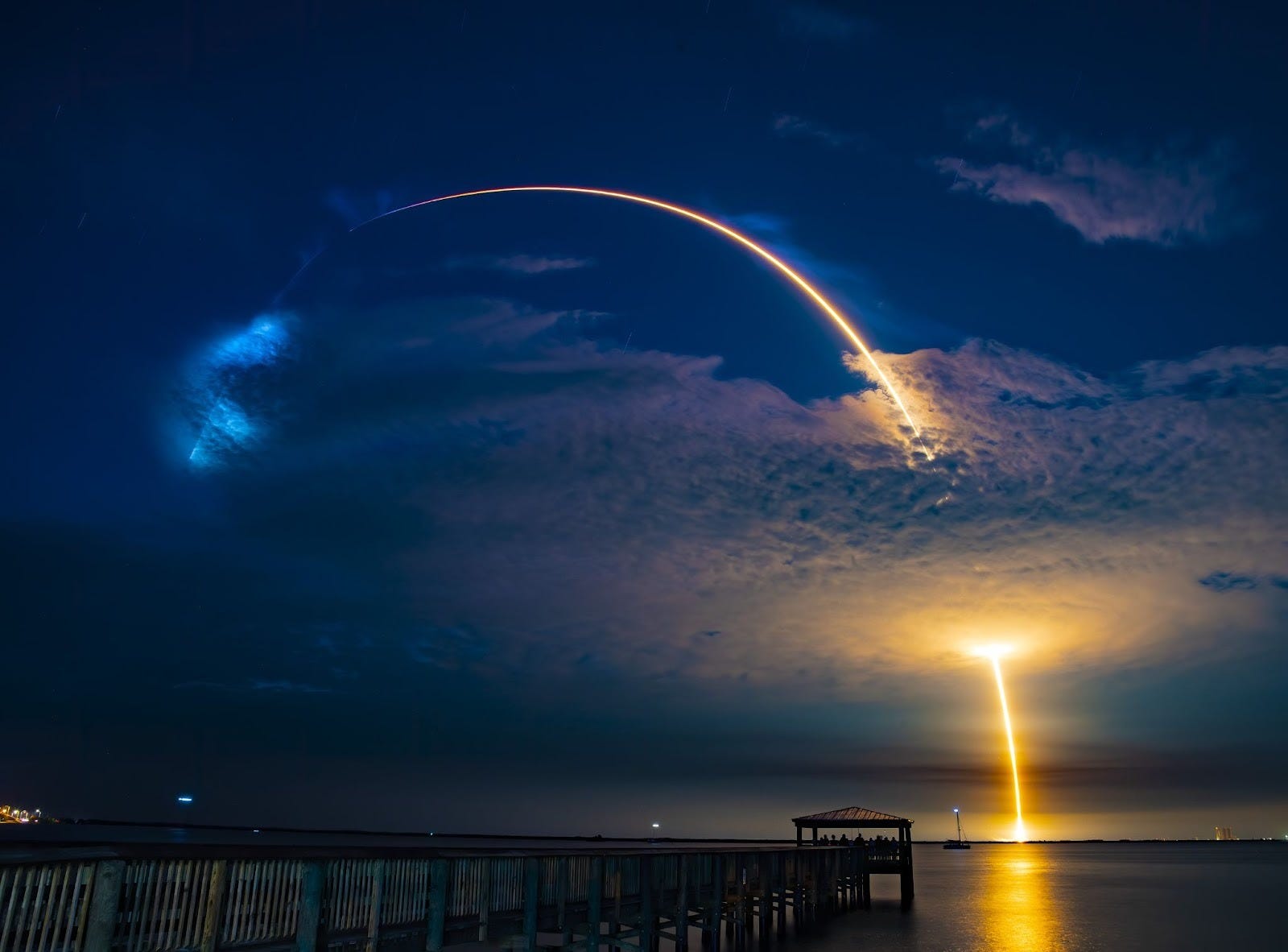
From Petrozavodsk to the orbital commons, transparency is a survival imperative.
The Petrozavodsk affair is not just a curiosity of the Cold War. It is a paradigmatic case study whose lessons remain highly relevant today because the conditions that made it possible, state secrecy, the compartmentalisation of information and the institutional inability to share launch data, have not disappeared. In many respects, they have worsened.
This trajectory, from concealment to near-catastrophe, exemplifies a principle that is now widely recognised in the scientific literature as fundamental to space governance. Space debris is a global problem that can only be solved through international cooperation and data sharing, the two prerequisites for establishing an effective space surveillance system. However, some space powers still refuse to share the information they collect, while those that do share it keep part of it secret for reasons of national security. Anti-satellite tests conducted by China, the United States, India and Russia have significantly increased the amount of debris in low Earth orbit. In November 2021, Russia deliberately destroyed its Kosmos-1408 satellite, creating over 1,500 additional pieces of trackable debris and forcing the International Space Station (ISS) crew to take shelter. The paradox is striking: the same space power that refused to admit the launch of Kosmos-955 in 1977 is today intentionally generating debris whose proliferation threatens all orbital actors.
Since 1993, the Inter-Agency Space Debris Coordination Committee (IADC) has organised annual meetings on the measurement, modelling, protection and mitigation of debris. This international consensus remains fragile as long as states maintain a culture of secrecy surrounding their launches and orbital failures. The USSR’s inability to disclose the nature of its space activities allowed an information vacuum to flourish, which was immediately filled by non-scientific narratives. This resulted in thirteen years of scientific and military resources being mobilised down a false trail whilst the Proton 77-091B stage quietly continued its orbital disintegration.
Transparency regarding launches, including military launches, must become a binding standard rather than an optional extra. The only coherent defence framework against the risks that nations have introduced into orbit is shared knowledge. No surveillance programme can compensate for the silence of those in the know. The deafening silence surrounding both OceanGate and Petrozavodsk demonstrated what not to do with regard to secrecy policies and the compartmentalisation of information.