



On 1 April 1957, the BBC’s Panorama programme devoted three minutes of primetime airtime to the annual spaghetti harvest in a Swiss valley. The programme explained that the mild spring and the disappearance of the spaghetti weevil had led to a particularly bountiful crop. The presenter was Richard Dimbleby, the most respected journalist in Britain at the time and renowned for his coverage of royal funerals and coronations. The programme was such a success that the BBC was inundated with calls from viewers asking how to grow their own spaghetti trees.
Nineteen years earlier, on 30 October 1938, Orson Welles presented his adaptation of The War of the Worlds to CBS in the form of fake news bulletins. The print media, a direct competitor to radio for advertising revenue, was quick to amplify the story of a national panic which, on the scale described, probably never actually took place.
Closer to home, on the night of 9 June 2018, seven French video artists led by Arnaud Thiry from the AstronoGeek channel, alongside Defakator, La Tronche en Biais, Hygiène Mentale and Un Monde Riant, created a fifty-metre crop circle in under two hours in a field in Sarraltroff, in the Moselle region, with the farmer’s complicity. This followed in the footsteps of a tradition of nocturnal land art established in the 1990s by John Lundberg’s British collective Circlemakers. Over the following two months, they filmed the ‘specialists’ authenticating their creation as extraterrestrial, measuring in Bovis units what their pendulums told them and communing with the energies. Umberto Molinaro, described by Le Républicain Lorrain as ‘the pope of crop circles’, declared on camera: ‘This crop circle is so elaborate that a human being could not have made it.’ Gilles Munsch, a secondary school mechanics teacher and author of the VECA Report as early as 1993, was the only observer to conclude, without prior knowledge and on the spot, that it was a human creation. He remains a largely underrated figure in French-speaking research into crop circles, and at Sarraltroff he applied the method he had formalised twenty-five years earlier.
These three cases, which have since become textbook examples, share a simple dynamic: a hoax spreads by latching onto a reputation for reliability and then survives in the collective memory, despite being refuted. Spaghetti, Martians and crop circles make us smile today because they cost nothing other than a suspension of disbelief.
In Paris, on 28 April 2026, a French website published its fifty-third ‘scientific article’ on the Bayesian analysis of a corpus whose fictional nature the author had admitted in April 1993. It is this second, more low-key and infinitely more instructive case that forms the focus of the remainder of this article.
A History of Ummo
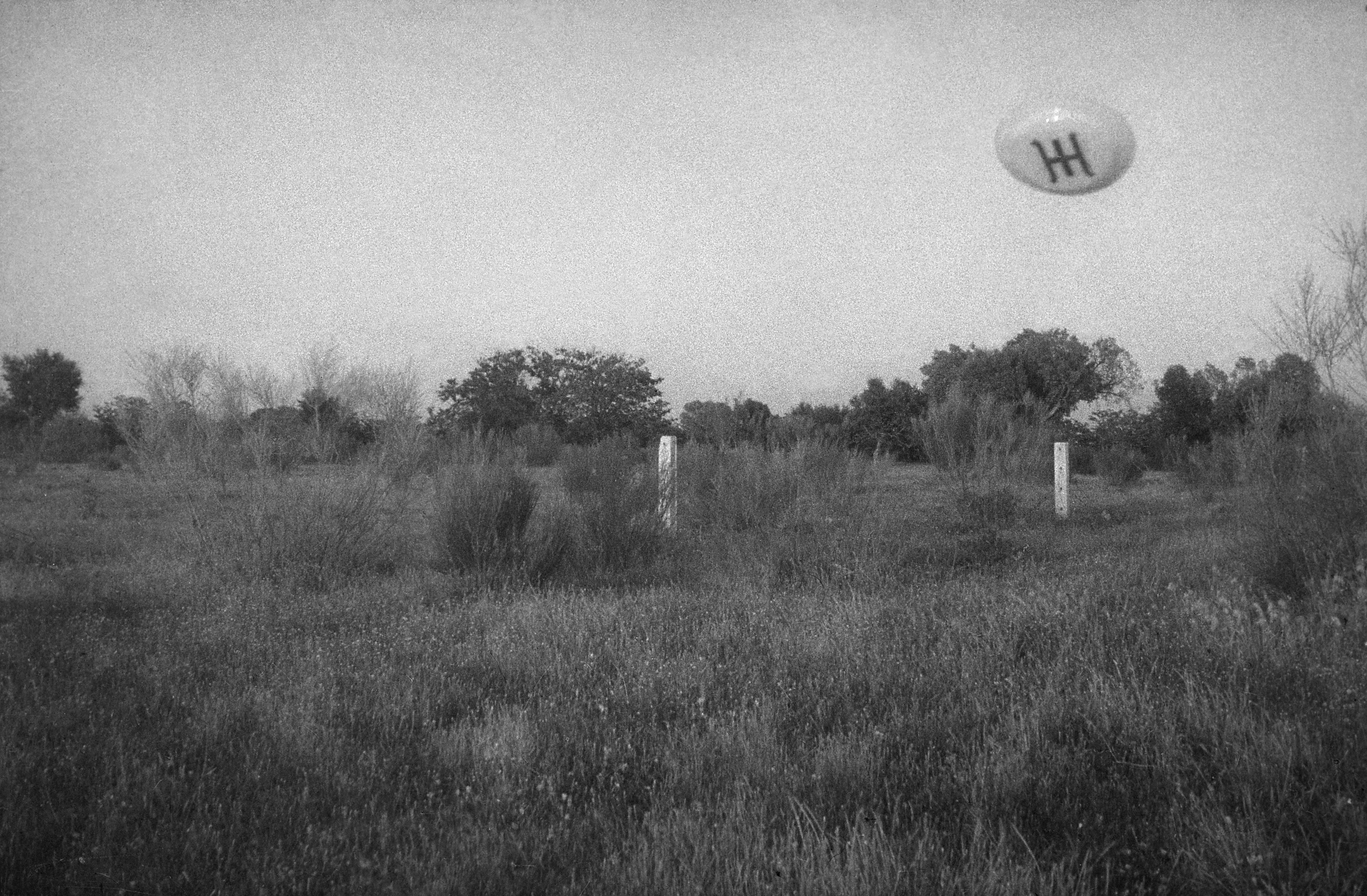
The Ummo affair began on 14 January 1966 in Madrid, when José Luis Jordán Peña, a telecommunications engineer and active member of the Spanish Society for Parapsychology, called Fernando Sesma Manzano, an Esperanto teacher and leader of the Amigos del Espacio. This was a group that regularly met in a bar on Calle Aduana to study UFO phenomena. With his voice distorted by a homemade device, Peña posed as an emissary from the planet Ummo, which he claimed was orbiting around the star Wolf 424. He announced that a research team had reportedly landed discreetly in La Javie, in the Basses-Alpes, on 28 March 1950. A few weeks later, typed letters bearing a distinctive seal intended to prove their authenticity began to arrive at the addresses of recipients whom Peña had carefully selected from the Spanish UFO community.
Over the next twenty-two years, Peña produced an unparalleled body of work in the history of UFO hoaxes. He wrote several hundred letters, some of which ran to several dozen pages, containing detailed descriptions of the planet Ummo and all its inhabitants, including their physiology, political philosophy, cosmology, ideophonic language, tetravalent logic, metaphysics, and religion. To anchor the narrative in reality, he staged physical events: a flying saucer bearing the Ummite insignia appeared above Aluche on 1 June 1967; a whitish disc was observed in San José de Valderas; and fragments of polymer were recovered in Santa Monica. Peña himself admitted in 1993 that these fragments were made of polyvinyl fluoride, a material patented by DuPont in the United States in 1947 (Jordán Peña, J. L., ‘UMMO: Otro Mito que Hace CRASH’, La Alternativa Racional, no. 29, ARP – Sociedad para el Avance del Pensamiento Crítico, Summer 1993). )
The hoax spread beyond Spain from the late 1960s onwards. It became one of the most hotly debated cases in European ufology, thanks in large part to Antonio Ribera’s book UFO: Contact from Planet Ummo, published in 1973. However, it is important to emphasise from the outset that Peña did not create an ordinary hoax; he wrote a work of art. Regarded as a literary work, the Ummo corpus deserves a place in the history of great fictional hoaxes of the 20^(th) century, alongside the Voynich Manuscript or, more directly, Tlön, Uqbar, Orbis Tertius by Borges — a 1940 short story in which a fictional encyclopaedia of an imaginary world gradually infiltrates and replaces reality. Jacques Vallée explicitly suggested that the authors of Ummo had drawn inspiration from Borges, and this comparison sheds more light on the nature of the work than any factual debate over its authenticity could.

The ‘white coat’ bias
However, it is when the project begins to recruit practising scientists that the affair takes on its unique dimension. We can draw a comparison with the story of the Cottingley Fairies.
In July 1917, two cousins, Elsie Wright (aged nine) and Frances Griffiths (aged sixteen), borrowed their eldest cousin’s father’s camera. They returned half an hour later with a photographic plate on which Frances appeared behind a bush, surrounded by four dancing fairies. The case gained credibility through the involvement of Arthur Conan Doyle, who wrote a book about it in 1922 called The Coming of the Fairies. Elsie Wright confessed to the hoax in 1981 and again in 1983, revealing that the fairies were cardboard cut-outs based on illustrations from Princess Mary’s Gift Book, published in 1914. This information is held at the National Science and Media Museum. Frances Griffiths, her cousin, maintained until her death that the fifth and final photograph, ‘The Fairy Bower’, was genuine. This lingering doubt carries as much weight as the confession; it hints at the mechanism that the Ummo affair would bring to its logical conclusion.
From 1968 onwards, Ummo operated using the same method, but with an added degree of sophistication. The scientific authorities recruited did not merely lend their names to the case; they incorporated it into their own work. Jean-Pierre Petit, a young magnetohydrodynamics researcher at the CNRS at the time, became aware of the Ummo letters in the late 1960s and began incorporating some of their concepts into his own models.
In the acknowledgements section of his 1995 article ‘Twin Universes Cosmology’, published in the peer-reviewed journal Astrophysics and Space Science, Petit went so far as to thank a ‘Professor Oaxiiboo F’ – that is to say, an Ummite – by name. This gesture is unusual and merits careful consideration. By doing so, Petit effectively makes the Ummites co-authors of his scientific work. The distinction is subtle, but it elevates the ‘white coat’ from a peripheral to a structural role. They become part of the narrative.
This manoeuvre produces the circular validation effect that is the hallmark of the ‘white coat’ bias in the Ummo affair: a heterodox scientist validates a heterodox text by incorporating it into their heterodox theory, and each element supports the others without any being tested independently.
The same logic can be seen in the cosmological aspect of his work. Since 1977, Petit has advocated the Janus theory, which he explicitly links to the Ummite corpus via the motif of twin universes. In 2019 and again in 2022, Thibault Damour — recipient of the 1996 Einstein Medal and a tenured professor at the Institut des Hautes Études Scientifiques — provided detailed technical criticism of the theory. Damour demonstrates, with supporting calculations, that the two Bianchi identities imposed by the model’s bimetric structure require two conservation equations for the two sectors of matter. However, the Janus model uses only one equation at a time, depending on the context under consideration. Based on this technical objection, which the relativity community has never abandoned, the model is formally invalidated in general relativity, as far as the published literature is concerned.
The Science of Ummo
The strength of the objection raised by Ummoists against any sceptical interpretation of the case can be summed up in a single sentence: however much one may claim it is a hoax, several pieces of physical and cosmological information contained in the letters have proved to be accurate. One must concede that this objection contains a grain of truth because it is sincere and not entirely false. However, it is not entirely correct either, and it is precisely this gap between the two that makes the case so challenging.
The claim most accessible to the non-specialist reader concerns the stellar origin of the Ummites. The initial letters, dating from 1966, state that the planet Ummo orbits the star Wolf 424 and provide a distance of 3.68502 light-years between the star and the Sun. However, the actual distance to Wolf 424 is 14.2 light-years, which represents an error by a factor of four. Furthermore, Wolf 424 is a close binary system comprising two red dwarfs (M5.5V and M7V), with an orbital period of 15.5 years and a semi-major axis of 4.1 AU. It has been catalogued since 1967 under the designation FL Virginis due to its eruptive activity, a fact that is never acknowledged in the letters. To date, no planets have been detected there, and the habitability constraints around M-type dwarfs (habitable zone at 0.02–0.05 AU, tidal locking and exposure to stellar flares) render the hypothesis of an Earth-like planet in this system highly improbable. Subsequent letters attempt a retroactive correction by referring to a distance of 14.6 light-years, but this is inconsistent with the binary system. No real visitor from that region could have made both these errors simultaneously. Peña himself admitted in his 1993 confession to having chosen Wolf 424 at random.
Other claims require case-by-case examination but often follow the same pattern: a genuine scientific fact accessible to any well-informed 1960s researcher is incorporated into a body of work and then presented retrospectively as a Ummite prediction. The episode involving the Norwegian cargo ship in 1934, which was used for ionospheric research (the experiment involved transmitting radio waves from the ship into the upper atmosphere to study the reflective properties of the ionised layer, which was key to all long-distance radio communications and would have signalled our presence to the Ummites), is a historically documented event that can be found in any maritime archive from that period. The Pioneer anomaly — the deviation in the trajectories of the Pioneer 10 and 11 probes — was not identified until around 1980, but has since been resolved by attributing it to the thermal radiation pressure of the probes themselves (Turyshev et al., Physical Review Letters, 2012). However, the proposed mechanism has no connection with the cosmological explanations put forward in the letters, yet the website ummo-sciences.org continues to devote analyses to it as late as 2026. The community treats this issue as open, despite it having been closed by the scientific community. The concept of twin universes, which is central to Ummite cosmology and was adopted by Petit in his Janus model, emerged at around the same time as Andrei Sakharov’s 1967 publications on CPT-symmetric two-universe cosmology. In 2004, Jacques Vallée wondered whether the letters might be a direct allusion to the work of the Soviet dissident. Magnetohydrodynamic propulsion was an active field of research in the United States and the USSR during the 1960s. Tetravalent logic, presented as an Ummo innovation, is recognised in the internal debates of the Ummo-Sciences forum itself as a variant of Saul Kripke’s modal logic.
The polyvinyl fluoride found in the Santa Monica fragments illustrates the mechanics with almost cartoonish clarity. Although it was presented at the time as an ‘alien’ material because it could not be found in Franco’s Spain, it is in fact a polymer that was patented by DuPont in 1947 and marketed under the name Tedlar since 1961 — that is, before the first letters. The rarity of the material in Spain in 1966 proves that it was terrestrial, not extraterrestrial; a well-informed forger could exploit this to create something that his targets would be unable to verify on the spot.

Falsus in uno, falsus in omnibus.
Disgrace by association of information.
It is precisely this combination of serious elements and documented errors that makes the case elusive to conventional sceptical criticism. This dialectical problem is brilliantly exemplified by the case of Robert Lazar. Since 1989, the American whistleblower has claimed to have worked on reverse-engineering extraterrestrial spacecraft at a facility called S-4 near Area 51. However, Lazar appears to have fabricated part of his CV, as neither MIT nor Caltech have any record of him studying there. As for the propulsion system he described, which he claimed was based on a stable isotope of element 115 (moscovium), the existence of this element was confirmed in 2003, but its alleged properties were contradicted: its known isotopes decay within a few hundred milliseconds, in stark contrast to the stability Lazar claimed. Nevertheless, some details are accurate. For example, an article in the Los Alamos Monitor from 1982, predating his notoriety in ufology circles, presents Lazar as a physicist employed at the Los Alamos Meson Physics Facility. His presence within the Los Alamos community is independently documented.
The Lazar case is problematic for critics precisely because it combines truth and falsehood. The most straightforward response is to dismiss the entire account by highlighting inconsistencies in his CV. In the Anglo-American legal tradition, this strategy is known as ‘falsus in uno, falsus in omnibus’, meaning ‘false in one point, false in all’. Coined in late 17^(th)-century English treason trials, the maxim was denounced by John Henry Wigmore, author of the seminal treatise Evidence in Trials at Common Law ( §§ 1008–1015), as ‘absolutely false as a maxim of life’, and modern legal doctrine has reduced its significance to that of a permissive inference: a witness may have lied on one point without this automatically invalidating the rest. This position has been confirmed by US federal case law, notably in Kadia v. Gonzales in 2007. In his judgment, Justice Richard Posner echoes Wigmore’s characterisation of the maxim as ‘primitive psychology’. Disrepute by association disregards this doctrinal precaution precisely: a partially false witness drags down with him fragments of information that are not false in his downfall. There is a symmetrical counterpart to this process which is even more dangerous: a body of evidence, part of which is sound, is deemed, by association, to be sound in its entirety. It is this second version that applies to Ummo.
In Revelations, published in 1991, Jacques Vallée delivered his verdict on the subject of alien contact. Alien Contact and Human Deception, is arguably the most accurate account of the subject to have been produced. According to Vallée, the scientific content of the Ummo letters is ‘well-informed but unremarkable’, ‘comparable to the scientific references in a well-researched science fiction novel’, and ‘plausible in the 1960s, but dated by 1990s standards’. This description treats the matter seriously without trivialising it. An excellent science fiction novel by authors such as Lem, Borges or Egan is not something to be scorned. It is a cultural artefact that deserves the same consideration as any other coherent work of the imagination. While the defenders of Ummo were right to appreciate this body of work, they were mistaken to classify it as authentic documents rather than a kind of collective fan fiction. The distinction is minute, yet it changes everything.
Only at this point does it become possible to revisit the central argument in their defence without being dismissive: ‘several pieces of information have proved to be accurate’. This argument is valid if we replace ‘accurate’ with ‘plausible and consistent with the state of the art available at the time of writing’. However, it is false if by ‘accurate’ we mean that they anticipated subsequent discoveries. The decisive test is this: can we identify a single Ummite assertion that was not accessible in the contemporary scientific literature, and which has subsequently been proven correct? Based on the current state of public analysis, the answer is no. The opposite, however, is well documented: Wolf 424 has been ruled out; the Pioneer anomaly has been explained by other mechanisms; and astronomical predictions regarding the positions of other planets in the solar system have proved inaccurate. The corpus contains serious scientific material because it was written by a well-educated man who was up to date with current events in his time. As far as public analyses allow us to judge, it contains no information that could not have been obtained without contact with extraterrestrials.

The Confession and Survival of the Myth
On 2 April 1993, Peña received a letter from the Ummites, sent from Cuba, suggesting that his friend, Rafael Farriols, should question him about his role in the case. The letter has not been authenticated, and its origin remains a mystery, but it served as a catalyst. Peña replied on 8 April 1993, admitting to being the author of most of the UMMO letters since 1966. A few months later, in the summer of 1993, he publicly explained the mechanics of the hoax in an article entitled ‘UMMO: otro mito que hace CRASH’, published in issue no. 29 of the Spanish sceptical magazine La Alternativa Racional. In the article, he wrote, ‘I decided to create a myth called Ummo, embellishing it with a fake landing and fake evidence. I recall obtaining sheets of polyvinyl fluoride that were so resistant to tensile stress and temperature that they were catalogued by NASA — they were virtually unknown on our peninsula.’ The hoax was almost flawless. I launched it by means of anonymous letters embellished with pseudoscientific information, thereby arousing the expected interest”.
A second letter, dated 8 April 1993, contains a sentence that deserves to be read very slowly because in just a few words it encapsulates the essence of what Peña thought he had learnt from his experience. ‘I’m sorry to say it, but the lie can only be undone from a well-established scientific perspective.’ Peña ultimately believed that believers could only extricate themselves from the system through science. While he probably underestimated the capacity of community-based ecosystems to constitute an alternative form of science, his statement remains true in principle: as long as a body of work is treated as a text to be interpreted rather than an object to be verified, it cannot be refuted.
Seventeen years later, in November 2010, Peña reaffirmed his admission in a private letter to Ignacio Darnaude, one of the Spanish researchers most deeply involved in the case. He added that he had worked ‘with a North American organisation’. Some defenders of Ummo interpret this reference as a sign of a partially state-sponsored origin, but it has never been corroborated. However, it aligns with a hypothesis proposed by Vallée in his book Revelations (1991), which suggests that the letters may have originated from the Soviet intelligence services. This is due to the presence of cosmological theories in the corpus that are similar to Sakharov’s work, some of which had not been published. This could have been a means of covering their tracks or of recruiting gullible individuals among Western researchers interested in ufology. While the hypothesis remains unproven, it is not implausible. The operational mechanics of state-sponsored UFO disinformation have been documented in cases such as the Bennewitz affair, in which AFOSI created a false alien mythology for a civil engineer from 1979 onwards to neutralise his radio intercepts at Kirtland Air Force Base. Another example is Project Serpo, which was launched by the same operator, Richard Doty, in 1983 and again in 2005. If Ummo follows a similar pattern, it would be the European version: more sophisticated, text-based and probably less traceable. An internal email sent by Tim Cooper, a former insider in the American intelligence community, in 2009 is explicit about the general modus operandi. Disinformation aimed at the Soviets was routine practice for the CIA and the Air Force. It was designed to force opposing intelligence services to spend considerable sums investigating paper jobs. In this interpretation, Ummo would be one of these particularly successful paper jobs.
However, regardless of the exact origin of the dossier, the events that followed Peña’s confession were unprecedented in the history of UFO hoaxes. The Ummo community did not disband. It continued. Even better, it became institutionalised.
The Ummo Trap and the Sunk-Cost Fallacy
Thirty-three years after the 1993 confession, on 28 April 2026, the website ummo-sciences.org published its 53rd ‘scientific article’. The title is ‘How to analyse the Ummo dossier using Bayes’. Written by Rémy Galli, the article is presented as an introduction to a series that will use Bayes’ theorem to evaluate the potential origins of the corpus. Previous articles by Galli have compared Ummo cosmology to John Wheeler’s Geometrodynamics (as set out in his 1962 eponymous book), Robert Charroux’s The Book of Betrayed Secrets (published in 1965), recent data from the James Webb Space Telescope, the Drake equation and the cosmic radiation observed by the Pioneer probes. Ummowiki.fr, launched in August 2017, serves as a collaborative encyclopaedia containing around a hundred specialised entries. Each term in the Ummite vocabulary has its own entry, including definitions, canonical instances, and internal debates. Controversies between authors are documented with a seriousness that rivals that of an academic wiki. On the website and within the wiki, the word ‘aveux’, when referring to Peña’s confession, is consistently enclosed in quotation marks.
At the time of writing, the same community is organising an internal video conference symposium intended to discuss the coherence of the latest theoretical developments with authors and readers of the corpus. This is the mechanism’s furthest logical extension: a UFO hoax that has established its own academic meetings.
The theory that enables the community to preserve the authenticity of the corpus while acknowledging the initial fraud is that of the ‘relayers’. Peña suffered a severe stroke in 1988, followed by several more between 1988 and 1993, leaving him partially disabled. Supporters of this theory argue that the production of letters continued after the stroke, which they claim proves that other manipulators took over. This theory has the remarkable epistemological property of being unfalsifiable: it preserves the idea of extraterrestrial intervention while acknowledging that some of it was a hoax. It can also adapt indefinitely to the corpus’s dubious elements by attributing the untenable to Peña and the valid to the intermediaries. No future confession will be able to close the case because any new confession will be treated as just one intermediary’s confession.
This is the central mechanism, symbolising the excesses of ufology. The Ummo trap is the process by which a literary hoax becomes its own scientific institution, complete with journals, a peer-review protocol, a technical vocabulary, internal orthodoxies, documented schisms, and a body of work that can no longer be challenged from outside the community without the challenger having first been validated by it. At this stage, the system protects itself; the critical vantage point is no longer accessible because doing so would require the community to acknowledge its errors — that is to say, to invalidate sixty years of intellectual investment.
The probability of such a collective renunciation is close to zero. The Ummo trap is the symmetrical inverse of dishonour by association. Whereas dishonour by association discredits a witness through their proven errors, the Ummo trap validates a text through the investment of those who study it. Both distort the verification process. To be defused, both require an external, neutral mechanism that no isolated community can produce itself.
This is demonstrated, by contrast, by the fate of the Cottingley affair. It took sixty-six years for the Yorkshire fairies to be exposed. However, when Elsie and Frances confessed in April 1983, their confession was accepted by the community of people who had once been interested in the case. Elsie Hill wrote to the British Journal of Photography and Geoffrey Crawley published his analysis, after which the matter was laid to rest. In 2026, no Cottingley enthusiast wrote a scientific article on the internal consistency of the photographs, nor does an ‘ummowiki’ on the fairies exist. The difference does not lie in the quality of the debunking, which was trivial in both cases. It lies in the ecosystem that was built up during the period of belief. Unlike Cottingley, no internal journals, specialised vocabulary, hermeneutic debates or successive generations of analysts were developed. Once the confession had been made, there was nothing to protect. Ummo, on the other hand, spent thirty years building a substantial cathedral, and Peña’s confession came at a time when it was too substantial to abandon.
It is precisely this accumulated substance that makes Ummo unique. This should also give us pause for thought beyond the field of ufology, as it is a model of what can happen to any epistemic community deprived of external arbitration.
Transparency as an antidote
The three pitfalls lead to the same question: who controls the verification process? The ‘white coat’ bias conveys authority without justifying it. Disgrace by association can result in unjust disqualification. The Ummo trap allows entry without testing. All three disrupt the authentication process and operate in spheres where there is no public, neutral body available to adjudicate between competing claims. The Cottingley case was eventually resolved because the relevant community had not established an alternative institution. In contrast, the Ummo case remains unresolved precisely because such an institution has been established. The problem in each of the two cases is the absence of a verifying authority whose legitimacy is broad enough to bring the matter to a close with its decision.
This issue is directly relevant to the ongoing investigation into unidentified aerospace phenomena in the United States, which reached a turning point in 2023 with the Grusch affair and is now entering a new phase following the parliamentary passage of the UAP Disclosure Act in 2025–2026, sponsored by MPs Tim Burchett and Eric Burlison. The structural risk facing the UAP ecosystem is the proliferation of Ummo-style enclaves. As official disclosure is delayed, communities form around partial eyewitness accounts, uncertain documents, and partially verifiable testimonies. Each community develops its own internal validation protocol. Ultimately, an excess of incompatible interpretative frameworks renders the landscape of the issue unreadable, as none of them have a procedure for acknowledging their own errors.
The law on the declassification of UAPs establishes a framework within which the truth, whatever it may be, can be articulated. Mechanisms such as statutory protections for whistleblowers, regulated declassification, independent audits, authorised review committees and access for elected representatives to classified information are tools that make validation possible. Without them, the UAP dossier risks becoming ‘ummised’ – producing its own reviews within its own agencies using its own vocabulary, orthodoxies and judges, and engaging in circular reasoning.
It is perfectly legitimate to love the Ummite corpus. It is a cultural artefact of rare richness, and the scientific curiosity it has aroused in two generations of Spanish- and French-speaking readers is a gift in itself that will never fade. Bob Lazar rightly enjoys a great deal of goodwill within the ufology community. Whether to classify them as genuine institutions is a matter for debate, and such a discussion is in no way demeaning to those who have loved the Ummite corpus. In fact, acknowledging that one loved a subject for what it was and not what it claimed to be is the most valuable intellectual exercise that a case of this kind can inspire in its readers. As Peña wrote in April 1993, falsehood can only be unravelled from a well-established scientific perspective. However, science can only be consolidated through institutions that allow for critical distance. Transparency is not just a slogan; it is the invisible infrastructure that stops communities believing that today’s falsehood will become tomorrow’s truth simply because enough people believe it.
As we bring this dossier to a close, the contrast between the energy expended over fifty-eight years to internally validate a body of work whose author has confessed to its fictional nature, and the energy that could have been mobilised through public investigative procedures such as sworn hearings in the US Congress, parliamentary inquiries in the US and Europe, and the public inquiry by GEIPAN in France, is thought-provoking. The difference between a community of observation and a community of devotion lies in where we direct our efforts.
Translation by Kate Sellier