


On 12 June 2026, the Department of War published the third batch of PURSUE documents on its war.gov/UFO portal. The press focused mainly on the images: six videos of ‘orbs’ produced by the FBI in 2026 based on eyewitness accounts, including several artist’s impressions. Three days earlier, on 9 June, former intelligence officer David Grusch, alongside a bipartisan group of elected representatives and several prominent figures – including Tim Burchett, Eric Burlison, Tim Gallaudet, Leslie Kean and A.P. Luna – called on the steps of the Capitol for the declassification of files that were still being withheld.
In response to a question, Grusch also referred the audience to a specific document: an Australian assessment classified as secret in 1971, signed by the head of Canberra’s nuclear intelligence branch, which he claims documents “the US cover-up of the facts and the CIA’s involvement”. Available since 2023 at the National Archives of Australia, it also features in the body of documents that Washington is currently declassifying under Section 1842 of the NDAA. We shall return to this.
From this collection, one document in particular deserves closer attention than the others. Code-named Western U.S. Event, DOW-UAP-D077, it is signed by Jon T. Kosloski, director of the All-domain Anomaly Resolution Office (AARO). It is probably the most methodical memorandum of the lot. Its value lies less in what it reveals than in the way it distinguishes between what is established, what is ruled out, and what is left open.
Six agents, a ‘mother orb’, red orbs
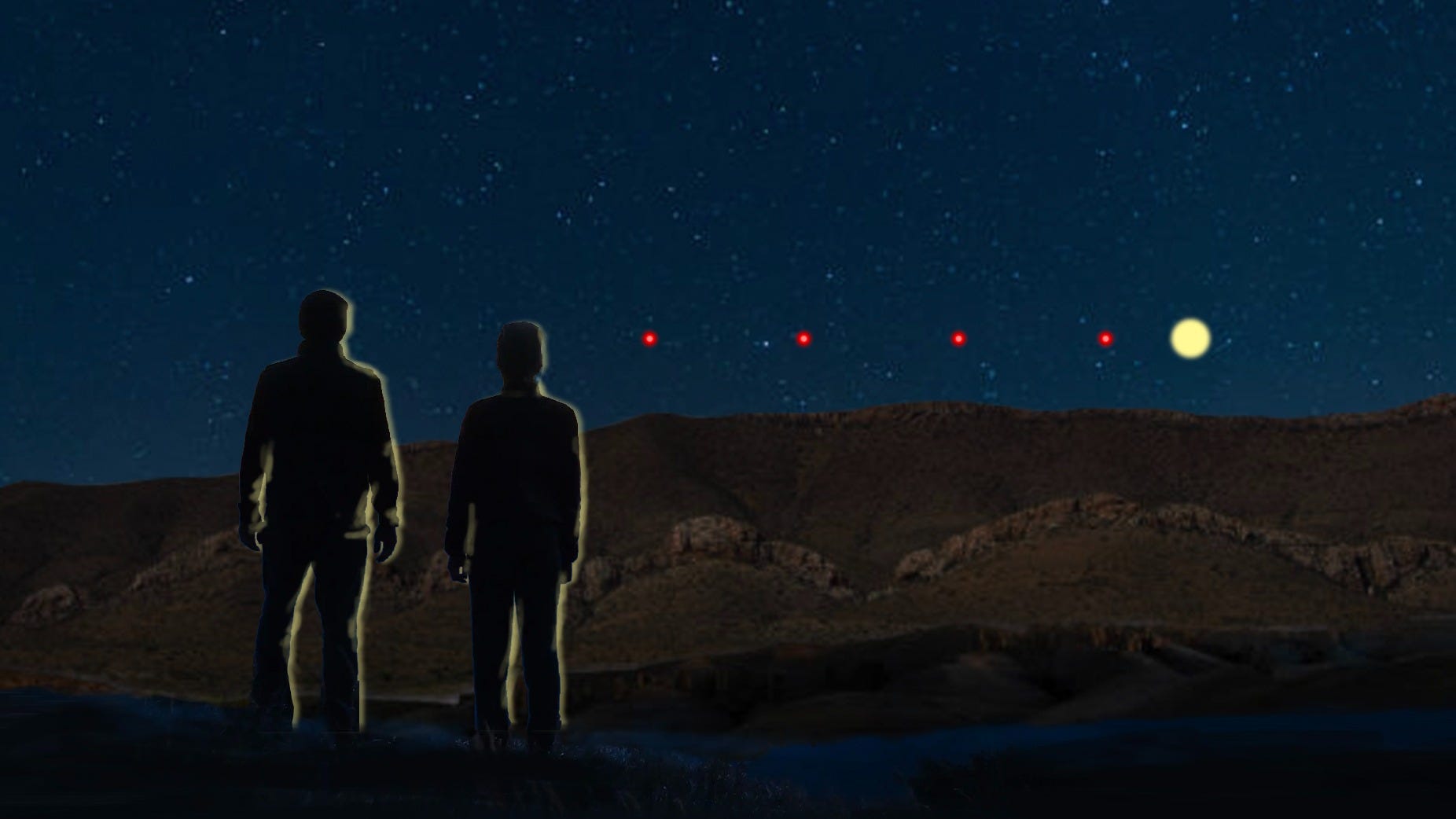
Dated 5 June 2026 and ranked first among the four cases listed on the portal, the memo summarises a report dating back two and a half years. In October 2023, over the course of two days, six federal judicial police officers, operating in pairs near a sensitive national security site in the American West, reported at dusk ‘orbs that launch other orbs’ (D077, p. 1). Each pair described, from a different angle, objects with the same characteristics.
The pattern is repetitive. A luminous orange ‘mother orb’ appears to produce smaller red orbs, one after the other, several times over the course of a few hours. The mother orb appears for one to two seconds, releases a cluster of two to four red orbs, then disappears. The red orbs follow trajectories that the witnesses consider abnormal: horizontal movements that appear coordinated, apparent changes in altitude. They remain visible for a few seconds, except for one, which remained stationary above a ridge ‘for several hours’. The whole phenomenon is described as ‘silent’.
One detail sets the tone. In a footnote, the AARO specifies that the descriptive vocabulary is that of the witnesses, reproduced verbatim ‘in order to preserve the integrity of the narrative accounts’. Indeed, ‘orbs’, ‘mother orb’ and ‘red orbs’ are consistently placed in quotation marks. The Bureau does not adopt these words as its own: it quotes them. Where the AARO writes ‘orbs’ in quotation marks, the public commentary, for its part, refers to plasma: at the Capitol on 9 June, Grusch spoke of a continuum ranging from ‘bipedal’ life to a ‘conscious life form based on plasma’. This typographical caution, a constant feature of the AARO’s work, is in itself indicative of how a serious agency handles a witness account.
The gap in the data
The AARO identifies the gap straight away. The officers did not collect any ‘video footage, photographic images or other technical data ’ (D077, p. 2) during the incident. Everything rests on the account. However, the Bureau points out that visual estimation of the distance, size, speed and direction of objects without reference points, at night, is constrained by intrinsic ‘biological and perceptual’ limitations.
This point is worth emphasising, as it contradicts the impression created by the release itself. The videos posted online are not footage of the event: they are reconstructions produced by the FBI in 2026 based on witness accounts from 2023. The file therefore contains no instrumental data. What we are watching is not the phenomenon itself, but a visual representation of its description.
Despite a thorough analysis, doubts remain.
Then comes the hard work. The AARO cross-referenced the accounts with commercial and military flight logs, radar data, spatial estimates and ADS-B data, before reviewing the hypotheses.
The exhaust plume from a military aircraft has been ruled out: the aircraft were flying too high, and the hypothesis does not fit with the silence, the hovering, or the apparent ‘launch’ of orbs. Drones are considered unlikely: a duration of several hours exceeds the endurance of standard multirotor drones. Foreign intelligence activity is deemed ‘highly unlikely’, as the kinematic profiles deviate too greatly from known adversarial systems. Natural causes – whether meteorological or astronomical – are ruled out due to the clear sky, the variety of viewing angles and the persistence over several hours, which neither a meteor nor a satellite reflection would produce.
This leaves two possibilities on which the Bureau has not reached a conclusion. The first is prosaic: infrared decoys. Flight logs confirm that military aircraft were operating in the area and deploying them during an exercise. The position of the phenomena, their apparent direction and the time of observation are highly consistent with radar and ADS-B data, to the extent that the AARO estimates that approximately 60 per cent of the activity ‘can reasonably be attributed to military aircraft’ (D077, p. 3).
The second line of inquiry is more uncomfortable, and a hasty account tends to overlook it: an American capability that had not been de-conflicted (i.e. not cross-checked against known friendly assets). The Bureau reviewed programmes run by the Pentagon and the intelligence community to verify whether the time, location and characteristics described corresponded to an American system. Its conclusion is mixed: certain characteristics match known military technologies, but the records do not allow for their presence at the scene to be established, and no single capability explains the whole phenomenon. ‘Plausible, but inconclusive’, it states.
One detail illustrates the hierarchy of evidence. The agents, whom the AARO deemed to have ‘professional knowledge of the visual characteristics of military flares’, stated that the phenomena did not display these characteristics. The Bureau nevertheless maintains the partial attribution, noting that the specific decoys carried on that day differ from standard illumination decoys. Faced with six expert witnesses, it is therefore the flight logs and radar that are decisive, not visual impressions.
Around 40 per cent remain unexplained. For this portion, radar and ADS-B show no known aircraft in the estimated line of sight from the ground. And one case defies all explanation: the red orb that remained stationary for several hours, ‘physically incompatible with the burn time and rate of descent of any known military flare’ (D077, p. 3). It is on the basis of this residual evidence alone that the AARO puts forward the hypothesis of ‘unrecognised technology’. But it does so without any real basis: a provisional hypothesis, by process of elimination, ‘not supported by technical data or material evidence’ (D077, p. 4). Put forward, and immediately withdrawn.
What tips the case towards further investigation rather than closure is a combination of factors: the consistency of the accounts when viewed from multiple angles, the agents’ familiarity with the operational environment, and the similarity to other sightings in the same region. The AARO states this bluntly, and that is the whole point of the report: it does not draw a conclusion; it documents an uncertainty that it refuses to resolve. A stationary red orb that no one can explain, and not a single step taken to investigate further.
Gemini: a major dossier, minor details
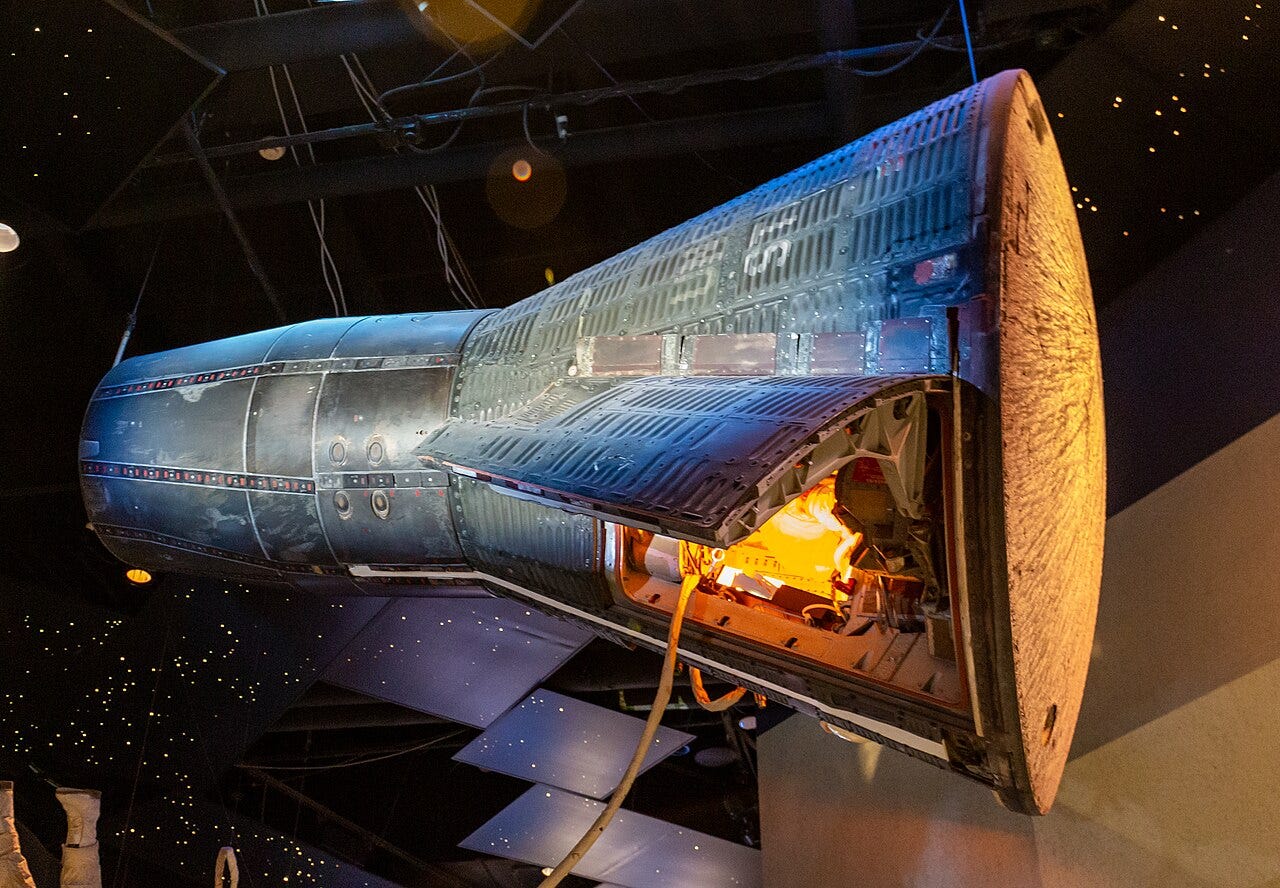
One might object that, within the same release, there is a body of material reputed to be more robust and serious: the debriefings of Mercury and Gemini astronauts, nearly 1,900 pages of technical transcripts (NASA-UAP-D015 to D022). Whilst one might have expected them to provide the smoking gun that has remained beyond the realm of folklore, reading these pages brings one back down to earth, and that is precisely what makes them interesting.
Truly anomalous elements are rare, and almost always resolved by the crews themselves. The words that send shivers down the spine of ufological literature turn out, at first glance, to be false friends: the “saucer” of Gemini 5 (D020, p. 178) is a table saucer to which Cooper compares the diameter of a column of flame; the “unidentified” of Gemini 4 (D018, p. 96) simply refers to a difficulty in closing a hatch. The only three truly consistent threads are, too, prosaic. The “fireflies” of Mercury (D015, p. 201)—those luminous particles that caused Glenn to rotate his capsule 180 degrees to examine them—turn out to be nothing more than paint or other particles detached from his own spacecraft. The large object spotted during re-entry by the Gemini 5 crew (D020, p. 191) is attributed by Conrad himself to their own jettisoned equipment, such as a retro pack or an adapter, burning up. And the zodiacal light that McDivitt and White photographed before dawn (D018, p. 121) is a well-known astronomical phenomenon. As for the most famous case – the cylindrical object with an arm that McDivitt is said to have observed on Gemini 4 – it is simply absent from the text of these debriefings. Taken at face value, the official astronaut dossier is not the repository of the unexplained that one might imagine: it is, in the overwhelming majority of cases, a matter of engineering banality. And it is this observation, more than any anecdote, that deserves to be added to the record.
The fate of the famous “bogey” sheds light on the reverse mechanism – the one that creates the unexplained. The word does not appear in any of the eight technical debriefings; not once. The famous exchange, “I’ve spotted a bogey at 10 o’clock, at altitude”, attributed to Borman on Gemini 7, appears only in a compilation sent to Congress and the White House in 1998 (USG-UAP-D001, p. 36). However, on the same page, when questioned by Houston, Borman says he has ‘several confirmed sightings’, but immediately adds that he has ‘the booster in sight’: the jettisoned Titan II stage, accompanied by co-orbiting ice and debris, providing the standard explanation. The transcript thus contains elements that put it into perspective. This is a textbook example of a UFO ‘theory’ constructed from decontextualised fragments, and the thread linking the space programme to a decision made in 1953.
1971, 1953: the root of the suspicion, and the Robertson Panel
The origin of the instinctive mistrust now surrounding every orb has yet to be understood. It was Grusch who identified the documentary source, in response to a question. He referred the audience to ‘an Australian assessment dating from 1971, formerly classified as “secret” and now declassified’, held at the National Archives of Australia, recommending that they read pages 7 to 16; the document,
in his view, by the ‘head of the nuclear branch’ documenting ‘the concealment of facts by the United States and the involvement of the CIA’.
The document exists. It is a minute paper from the Australian Joint Intelligence Organisation (NAA: A13693, 3092/2/000), signed on 27 May 1971 by O.H. Turner, head of the nuclear branch. But it must be read for what it is. Turner merely signs a sober cover note, which forwards two attached documents ‘compiled from official reports and statements by the CIA, the US Air Force, congressional hearings and the Project Blue Book archives’. The sensational claims attributed to it by the disclosure movement actually appear in the summary of the attached report. It states that the CIA’s Office of Scientific Intelligence, “in the context of the Robertson Committee meeting held in mid-January 1953”, allegedly pressured the US Air Force to turn Project Blue Book into a public instrument of “debunking”; and that by erecting “a façade of ridicule”, the United States sought to cover up ‘the real American programme aimed at developing craft capable of mimicking the performance of UFOs’.
What is well-established and verifiable is that, in January 1953, the Robertson Panel recommended a public policy of ‘debunking’ the phenomenon, an episode that Sentinel News has already recounted in detail. The scepticism described by Turner in 1971, and invoked by Grusch in 2026, stems from this documented decision.
What the state sought to play down, the present day is playing up again
The third release came out on 12 June 2026. On the same day, Steven Spielberg’s film Disclosure Day was released in cinemas. The plot follows a whistleblower determined to reveal the existence of non-human life. The film’s tagline, picked up by the press, proclaims that the truth ‘belongs to 7 billion people’: almost exactly the same phrase heard three days earlier on the steps of the Capitol, where journalist Leslie Kean asserted that the knowledge of our non-solitude ‘belongs to all of humanity’.
There is something profoundly unsettling about this full circle. In 1953, a scientific panel recommended managing the public’s perception of the phenomenon to restore it to the realm of ordinary. Seventy-three years later, the filmmaker who has most enduringly shaped the collective imagination of extraterrestrials is releasing a disclosure film on the very day the government publishes genuine files, using a vocabulary that fiction and the disclosure movement now share almost word for word. What the state sought to play down, the times are now playing up again.
What remains is the stubborn fact, as recorded by the AARO: a red orb that hovered motionless for several hours above a ridge, which no known hypothesis can explain, and which no measurements can account for.