The incident, documented in a report by the nonprofit organization Americans for Safe Aerospace, raises questions about flight safety.
As the aircraft climbed past 14,000 feet (4,260 m), air traffic control urgently ordered it to level off at 15,000 feet (4,572 m), reporting unknown traffic in their sector ahead, two nautical miles (approximately 4 km) away, rapidly approaching. The controller noted that this radar echo had “already appeared intermittently throughout the day.”
A few seconds later, both pilots visually identified an object that was described as an oblong spheroid lacking wings, windows, and navigation lights. They described its surface as metallic and resembling molten mercury. It had a translucent appearance, shifting shape, and seemed to pulsate and vibrate.
The co-pilot estimated that the object was about the size of a Boeing 737. However, the report mentions a length of approximately 40 feet (12 meters). This estimate is difficult to reconcile with that of a 737, which is about 40 meters long. This introduces an inconsistency in the description, likely due to a conservative estimate.
The object initially appeared to be stationary. When the co-pilot initiated an evasive maneuver to the right, the object instantly accelerated along the axis of the aircraft’s left wing and left the area at a very high speed. The entire event lasted less than ten seconds.

The co-pilot estimates the minimum distance to be approximately 500 feet (150 m), yet such proximity constitutes what the U.S. Federal Aviation Administration (FAA) classifies as a near-miss in flight. Indeed, given the difficulty of estimating trajectories and relative speeds in mid-flight, objects can become hazardous within seconds. Aircraft therefore maintain safety distances of several kilometers between them when at the same altitude, and several hundred meters between different altitudes.
According to the report, the collision avoidance system (TCAS) did not trigger any alerts. Installed on commercial aircraft, this system detects the risk of a collision by interrogating the transponders of other aircraft. However, the absence of an activation does not allow for a conclusion regarding the nature of the object, as not all aircraft are equipped with or identifiable by this type of device.
In their analysis, Americans for Safe Aerospace notes that the co-pilot, a former Marine Corps F/A-18 fighter pilot, has advanced training in visual aircraft recognition, lending credibility to his observation. The presence of two experienced witnesses is also a significant factor.
Air traffic control’s mention of similar activity observed several times throughout the day raises questions. When unidentified traffic appears to be moving through a busy departure corridor, one must ask to what extent crews could have been informed in advance of this activity. Systems exist to alert pilots to potential hazards, including Notices to Airmen (NOTAMs).
While this incident does not allow for a conclusion regarding the nature of the observed object, it does highlight a central aviation safety issue: unidentified objects moving through controlled airspace that exhibit atypical flight characteristics and are not integrated into conventional surveillance and collision-avoidance systems.
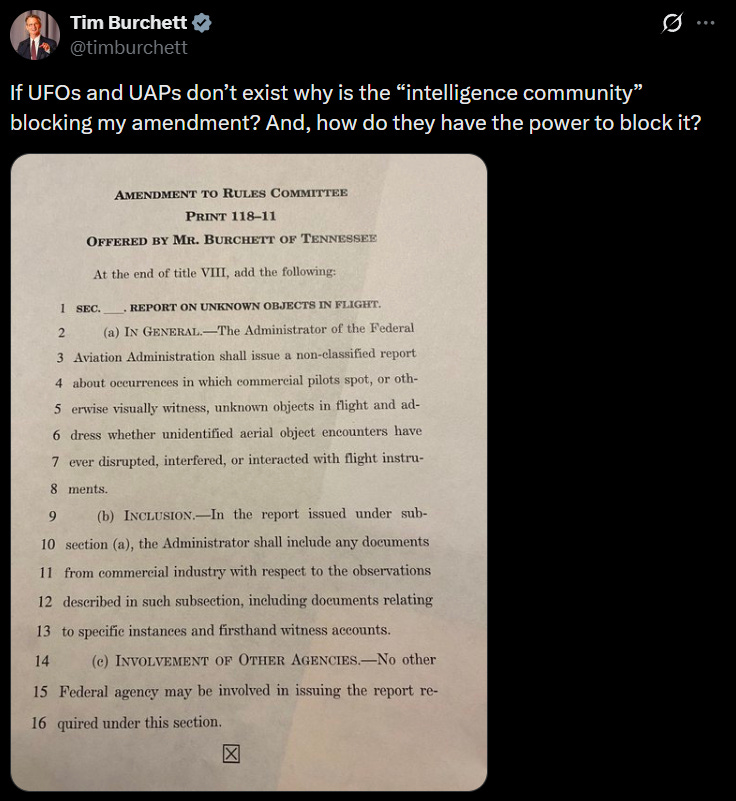
However, despite the danger posed by these flights, a recent amendment that would have allowed pilots to officially report their sightings was blocked from coming to a vote in the U.S. Congress due to lobbying by intelligence agencies, according to its author, Representative Tim Burchett.