

![Pascale JACQUES [EN]'s avatar](https://substackcdn.com/image/fetch/$s_!XFlT!,w_108,h_108,c_fill,f_webp,q_auto:good,fl_progressive:steep/https%3A%2F%2Fsubstack-post-media.s3.amazonaws.com%2Fpublic%2Fimages%2Fdd2b9b08-243d-4919-b7c4-343042051752_922x922.png)
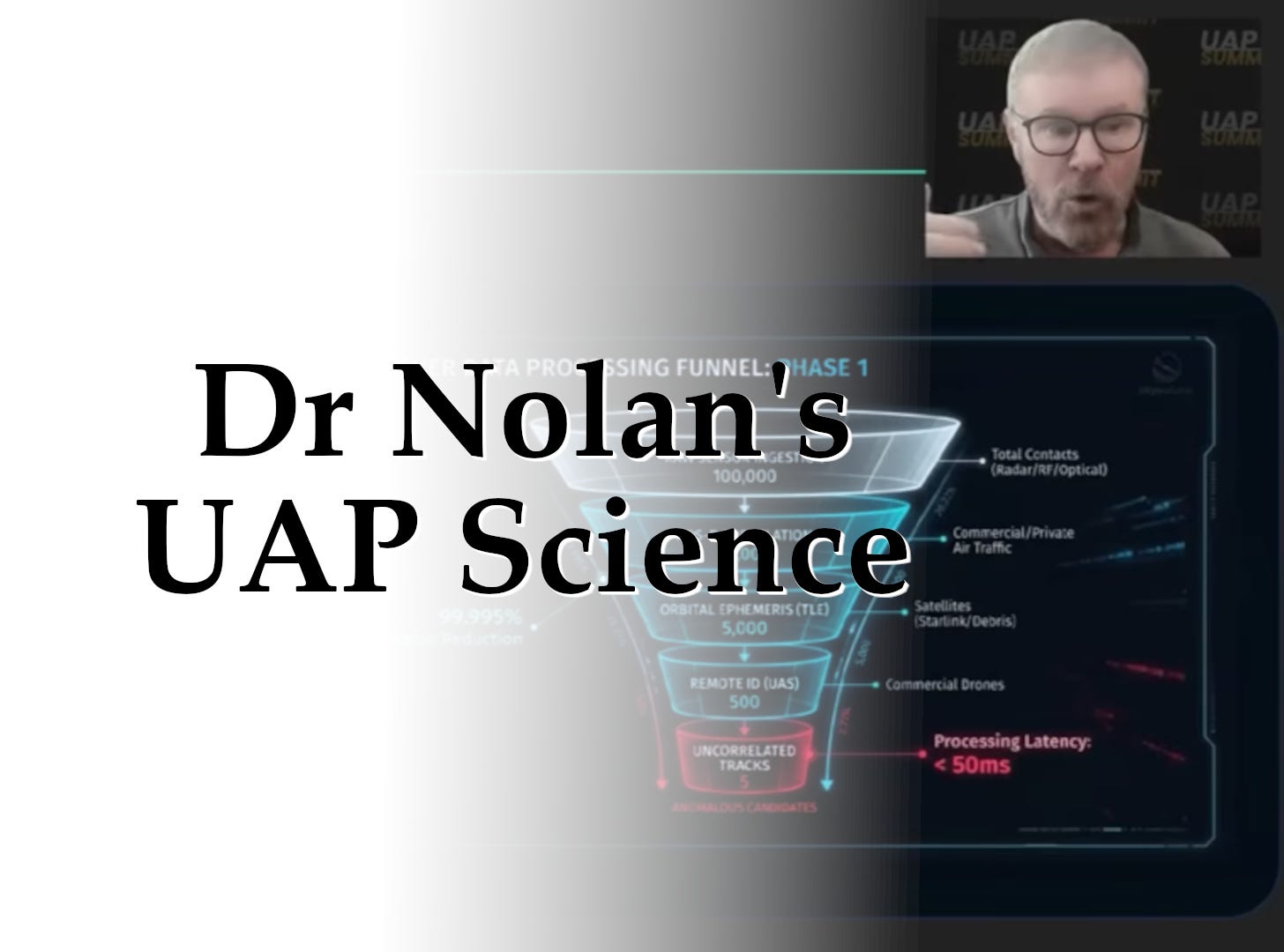
Who is Garry Nolan?
Dr Garry Nolan is a professor in the Department of Pathology at Stanford University School of Medicine, holding the Rachford and Carlota A. Harris Chair. He earned his PhD under the supervision of Leonard Herzenberg and conducted postdoctoral research with David Baltimore, who won the Nobel Prize in Physiology or Medicine. Dr Nolan has published over 360 research articles and holds 50 U.S. patents. His research focuses primarily on the immune system and its complex interactions with cancer. In 2021, he stated that government officials and representatives of an aerospace company had approached him for help in understanding the medical injuries sustained by certain individuals following alleged interactions with an anomalous aircraft. He is also the co-founder and executive director of the Sol Foundation, an interdisciplinary academic foundation focused on UAPs.
While some compare UAP researchers to biologists studying animals in a reserve or zoo, Dr. Nolan prefers the metaphor of a laboratory in which two groups of rats study each other.
“It's not a zoo. It's a laboratory where both sides, at least at this point now, are the rats. I would think that if they are real, they're smarter rats than we are.”
Indeed, it seems that the UAPs are particularly interested in our nuclear capabilities, biodiversity, cognitive responses and social cohesion, while we study their propulsion signatures, composition, behavioural patterns and origin.
Skywatcher Discovery Framework: Technical Field Operations to Scientific Analysis
The Skywatcher programme is a private initiative comprising three groups with different motivations and definitions of success: scientists, the military, and investors. The scientific approach necessitates the publication and peer review of results, which requires open access to the data and methods used to obtain them. The military prioritises strategic dominance and operational security, which necessitate the protection of capabilities and the compartmentalisation of data. Finally, investors seek a return on investment based primarily on the acquisition of intellectual property. They are therefore initially reluctant to engage in ‘open-source’ collaboration.
“This was actually more difficult than I would have imagined, navigating these competing vectors of scientific, military, and venture capital. […] And the issue here is what we did want to be able to do is bring radical transparency for the scientific data.
Nolan starts by setting-out his approach. He insists that he speaks for himself, not as a Skywatcher representative, and that whilst his conclusions are based on data or what he has experienced during Skywatcher events, they remain speculative. His role with Skywatcher was to help them design rigorous scientific experiments that could be reported, and to work out changes for later experiments. The aim is to create a solid base of preliminary data that can be handed over to another scientist so that they can come to similar conclusions.
What is proof?
First and foremost, G. Nolan revisits the concepts of data, evidence and proof to establish a semantic framework.
Data is raw information. It can be obtained from instruments, or it can relate to observations reported by eyewitnesses. While these may be anecdotal, the question arises: how many observations are needed for something to be considered true?
A set of validated data constitutes evidence. Evidence is obtained by ensuring that the data has been collected correctly, irrelevant elements have been removed and it has been placed in context. G. Nolan therefore proposes a multi-sensor approach involving radar trajectory, an infrared thermal camera (FLIR) and visual confirmation. Proof, on the other hand, is convincing, indisputable and reproducible.
“You could read every one of my actually now 360 plus papers and you will very rarely see us claiming in our biology proof. We always say “the data supports”. […] Proofs are really only possible when you set such high guardrails around you or what it is that you're trying to prove that it becomes compelling and undeniable for that there are some objects. So, in other words, it either has to land or you have to shake its hand. So, that would be for many people the only proof that they'll accept.”
According to G. Nolan, we could speak of evidence in the following cases:
Physical artefact: the discovery of materials exhibiting non-terrestrial isotopic ratios, or of engineered metamaterials that exceed current manufacturing capabilities, the authenticity of which would be verified by at least three independent laboratories.
Biological sample: biological material whose genetic sequencing does not correspond to the terrestrial phylogenetic tree or which indicates artificial synthesis. The sequencing could be evaluated and confirmed by peers.
In this regard, G. Nolan states:
“I've never seen a biological sample to date that represents anything that one would claim to be extraterrestrial. The Atacama [skeleton], which we showed was a human girl, to the dismay of some at least. So, I haven't seen anything, but obviously that would be fantastic. Of course, we all know James Fox's work going on down in Brazil with the Varginha episode. I think that's probably the closest that we've seen to any, let's say, verifiable anecdotes so far.”
Transfer of information: the communication of verifiable knowledge that humanity does not yet possess (e.g. the solution to the P ≠ NP problem or to the theory of grand unification). Validation would then be based on mathematical proof.
Violation of the laws of physics: demonstration of a technology that breaks the laws of physics as we know them under controlled conditions. These characteristics have already been presented by Luis Elizondo, who refers to them as the ‘5 observables’. Validation would then rely on corroboration by various sensors.
The Bayesian model
G. Nolan points out that scientists do not rely on binary thinking: Do you believe it? Is it true / Is it false? Science generally operates within a Bayesian model, which is a statistical approach developed over more than 100 years. It therefore involves placing what is considered to be evidence on a spectrum ranging from 0 to 100% in terms of likelihood.
“There are different frameworks. The so-called Sagan standard of extraordinary evidence, I mean, just evidence. I don't think it needs to be extraordinary. I think we would need our P value, or our probability, to be greater than 99%. Strong evidence is what you would call preliminary data moving towards this. And then just saying raw data.”
G. Nolan thus defines three levels of evidence:
Probability greater than 99% ⇨ Sagan’s standard (extraordinary evidence). Statistical certainty. Requires a radical shift in the scientific consensus. The anomaly is accepted as a physical reality. (P > 0.99)
Probability greater than 90% ⇨ Strong evidence (actionable information). The risk of a false positive falls below 10%. Justifies targeted investigations and changes in strategy. (P > 0.90)
Probability greater than 50% ⇨ Detection (tipping point). The hypothesis becomes “more likely than not”. Insufficient to draw a conclusion, but triggers the deployment of dedicated sensors. (P > 0.50)
For G. Nolan, one of the advantages of such an approach lies in the integration of reports and testimonies from members of the public. Referring to the presentation on citizen reporting networks as data infrastructures, G. Nolan adds:
“Now, this is something that I think would be great to apply to the kinds of data that Robert Spearing just presented because they have the raw numbers to put this into an ingestion system for Bayesian truth where you can look at the priors and the priors basically add up to a probability that gives you a great outcome.”
The Skywatcher experience
Nolan explains that the mission was to uncover and deliver accurate, timely and comprehensive aerial intelligence through evidence-based collaboration with federal, state and local authorities. He insists that Skywatcher is not a governmental project but very much a privately funded initiative gathering special operators, military, intelligence officers, and national security leaders, and himself as a scientist. The end-game for the investors was not intellectual property but proof.
It outlines the four stages of the recommended scientific approach:
data detection and collection,
validation of a multi-sensor correlation,
analysis of flight dynamics,
production of intelligence data.
Data Detection and Collection
Nolan discusses the equipment used for data detection and collection, as well as the importance of its configuration. He emphasises the importance of avoiding data filtering at source. Devices are often calibrated to detect only objects with similar characteristics (airplanes, missiles, drones, etc.) and filter out all other data before recording it. However, an object that remains completely stationary despite wind pressure should not be excluded from the study’s scope. G. Nolan notes that Chris Mellon had advocated opening the filters. This openness to a broader spectrum enabled the detection of Chinese balloons in February 2023. Similarly, former pilot Ryan Graves, who testified under oath before Congress, noted that UAP incidents near aircraft carriers began after a radar capability upgrade.
Validating a multi-sensor correlation requires cross-referencing telemetry, infrared, optical and ROEM data in order to eliminate false positives. He notes that algorithms are rigid, whereas human perception is adaptive. Experienced pilots can identify unusual behaviours such as formation changes or non-ballistic movements, which detection platforms may filter out.
“The pilot is also a sensor platform, and [...] we treat a pilot visual acquisition as a high confidence trigger [initiating immediate multi-spectral sensor focus on the designated azimuth] to say, okay, now we need to turn everything else on.”
“So, multi-sensor correlation was the objective. We were looking for things that had anomalous flight and something that would move in an intelligent manner, and should we have been so lucky, which we were not, to obtain some piece of technology that might have produced intelligence out of it. ”
“So, at the end of the day, what we ended up with was a very few number of tracks that were not in any way prosaic.”
Analysis of flight dynamics
Here, Nolan uses the immutable laws of physics as a filter. Any capabilities beyond the scope of conventional aircraft will be considered abnormal. This includes instantaneous acceleration exceeding 20 G. For reference, the structural limit of an F-35 is 9G. He also mentions the absence of a sonic boom and ‘cold hypersonics’ (the absence of material heating observed at the leading edge of objects moving at hypersonic speeds).
Generation of intelligence data
Although the data obtained is still being analysed, G. Nolan is very cautious and reserved about the prospect of publication. The diverse nature of the Skywatcher group has undermined the scientific rigour required for such studies.
“We’re still actually analyzing the data. We had, as I said, thousands of tracks, and this is where that triumvirate of groups (scientific versus military versus the capital structure) got things wrong. That the science wasn’t always done in the way that would have been my preference in terms of making sure that all of the instruments were run in the same way at the same time, at least some of the first events. And by the time of the second and the third events, that had been fixed. But time-syncing was not done the way that it should have been done.”
“We have not met the multi-sensored data collection metrics that I would have preferred. We would always get it on one but not the other. And so we couldn’t get the Bayesian inference that allows something there. But now we know what it is that we really need to do, and we’ve identified a group that is known to work with the government that can help us make sure that all of our instrumentation is being set up in the right way, at the right time for further data acquisition with now refined procedures.”
“I think the framework that was worked out remains in place, and the objective is to replace anecdote. But anecdotes should not be thrown away because of the Bayesian utility of them. But I think I've shown you that the multi-sensor correlation is the absolute key.”
Thus, G. Nolan does not believe that Skywatcher must necessarily continue to exist as an organisation. For him, what matters most is the approach to be taken.
And when asked about possible spacecraft landings or close encounters, he replies:
“Nothing ever landed, nor was anything materially collected. And if it was, it was something that I didn't know about. But look, I wish it something was, but the short answer is, if that's a rumor, it should stay as such because it's not.”
The Bayesian model applied to eyewitnesses
Garry Nolan also demonstrates that the Bayesian model can be applied to eyewitness accounts. To do this, we must return to Sagan’s concept of the ‘extraordinary evidence standard’. As a reminder, this corresponds to a level of certainty of 99% (P > 0.99).
“This is where I think it gets interesting: where we approach the bayesian standard. [...] Just by using simple Bayesian inference, by the time you've reached three or four simultaneously measured events or different events, your standard, actually your Bayesian priors go way up. Anybody out there can go do the math. Go ask chat GPT to help you if you want to learn how to do it. It doesn't take very much to do so. And I've run Bayesian analysis on basically several hundreds of anecdotes and what it is that it ends up creating in terms of outcomes.”
Bayesian inference allows G. Nolan to conclude that three sensors simultaneously detecting an anomaly result in a likelihood probability exceeding 99%. He achieves the same level of likelihood with eight trained observers (e.g. pilots) or 27 civilian eyewitnesses.
“When people say there's no evidence, that's because they don't have the knowledge of how Bayesian math operates. And they don't have the kind of scientific training that at least I apply to the problems that I work on.”
G. Nolan thus demonstrates that quality takes precedence over quantity. However, quantity also helps to achieve a sufficient degree of plausibility. It is therefore possible to incorporate accounts from civilian eyewitnesses into a scientific approach.
Analysis of materials
Garry Nolan is unable to provide further details regarding the data collected by Skywatcher, as he is bound by a non-disclosure agreement. He therefore discusses some of the work carried out in his laboratory on materials related to UFOs.
The Ubatuba fragments
He begins with fragments relating to the incident that took place in Ubatuba, Brazil, in 1957, which were given to him by Jacques Vallée.

“It's pretty clear now there's two chains of evidence of different materials that are claimed to come from the same event. One is highly pure magnesium (and Robert Powell and Michael Swords have done an incredible amount of analysis on that magnesium material). This was what was first reported. This material that I obtained through Jacques [Vallée] that we thought was magnesium and has some magnesium in it, actually turns out to be silicon.”
After carrying out atomic imaging using atomic probe tomography, physicists from Stanford’s Department of Physics realised that the distribution of the various silicon isotopes in the sample differed significantly from that found in natural silicon. In its natural form, silicon (Si) consists of three stable isotopes: ²⁸Si (92.2%), ²⁹Si (4.7%) and ³⁰Si (3.1%). However, the Ubatuba sample contains 72.3% ²⁸Si, 16.5% ²⁹Si and 10.9% ³⁰Si.
“First of all, it's nearly entirely like 99.9 percent silicon, the sample itself, only something which is usually made for silicon wafers and not something that was easy to make at the time. And certainly you wouldn't be modifying the silicon isotope ratios. So the wild speculation by one of the scientists over in the engineering department was that: there's less of what is supposed to be there and more of the next one and then more of the next one. There's a process that could do this and that's called neutron absorption.”
When a material is exposed to a high level of neutrons, a nucleus of that element can incorporate an extra neutron. Through this process, the isotope 28Si (14 neutrons) can be transformed into 29Si (15 neutrons), 29Si (15 neutrons) into 30Si (16 neutrons), and 30Si into phosphorus (P). Neutron capture could take place in a nuclear reactor. However, G. Nolan points out that to achieve such an isotope ratio, the silicon would need to be exposed for approximately 10,000 years in a nuclear reactor. G. Nolan demonstrates, with supporting calculations, that such a process yields isotope ratios identical to those of the Ubatuba silicon sample.
“It would require 25 kilo electron volts (keV) over a significant period of time to get the silicon isotope ratios that we achieved. And what is that amount of time? Something like 10,000 years in a nuclear reactor or a level of neutron radiation that is just at least at the time that these were capable of being found on earth. So, does that prove this stuff is alien? Absolutely not. It just says that it’s been engineered in a way that is interesting because it’s the exact ratio you would expect if you were to use this neutron absorption model, but found 40 or more years ago.”
“So it's an observation. It's data. And if I can get somebody else to agree with me that the data was collected correctly, it's not up to me necessarily to explain it, but it's up to us to then say, why? how? how did it get there? Why was it supposedly on a beach in Ubatuba, Brazil? And why is it different than the magnesium material that ended up going through another set of hands?”
G. Nolan points out that it is possible the various silicon isotopes were deliberately combined to achieve this ratio. But if that were the case, why choose a ratio that corresponds exactly to what one would obtain through neutron capture?
Samples from the Trinity site
G. Nolan then presents the study he conducted on samples of material recovered from the site of a suspected crash at the Trinity site. This is a laminated material consisting of layers of magnesium oxide separated by a layer of bismuth.
G. Nolan explains that the presence of bubbles measuring 50 to 80 µm, as well as their shape (rupturing outwards), demonstrate that they formed after the material was manufactured. Their presence is due to exposure to extreme heat following manufacture and originates from the molten material inside. This finding is therefore consistent with an explosion or a crash.
“Of course, we all know Hal [Puthoff]'s proposal that this would fit the idea of a metamaterial or a waveguide. I can't speak to that.”
“We actually did run a bit of a reflection, and it does absorb in the right area. I know that this is the same area where carbon dioxide absorbs, but we did do the controls. And this absorption criteria is due to the object itself. It is not due to just absorption of the FTIR in the air, because I know people have asked me that previously.”
“So it's actually in the range of what Hal [Puthoff] has suggested. It absorbs. What we have not done on the other side is see, well, if it absorbs, what does it emit? So that's one of the next steps that we'll be taking this material.”
Finally, G. Nolan studied the structure of the sample using EBSD (Electron Backscatter Diffraction). This technique makes it possible to map the structure of the grains and their orientation. EBSD imaging clearly shows that the magnesium crystals are positioned perpendicular to the bismuth layers.
“It is not something you would expect to see in a smelting process where people have claimed this is the bottom of a lead smelting system.”
“So what this rules out, and this is from material scientists who've looked at it, rules out rolling and bonding would have crushed the grains. It rules out casting, melting point mismatch between the bismuth and the magnesium. And it's not electroplating because of the reactivity. So those are ruled out.”
“Could have been done by vapor deposition. That's not something that we've really invented until the last 10 years. In bulk, technology at the time was maybe possible, but not to the extent that is seen here. Bulk layering even at this kind of resolution is challenging even today. It's not impossible, but it was not possible back then.”
“So we still need to do some further tests at the interfaces and to look at the transmission modes of this with various input.”
Physical after-effects
When asked about mast cell activation syndrome (MCAS), Garry Nolan discusses the analysis of a skin sample that was sent to him.
“Here's something interesting, to this point exactly. So, I was brought the biopsy of an individual who had claimed one of these kinds of attacks, let's say. And the biopsy was of their skin. And so, I brought [...] a block of the skin to a pathologist in my department. And she's a specialist in dermatologic investigations. And what we saw was the top layer of the skin was uninterrupted. And the inflammation was below in the skin where there was damage underneath, as if there had been some sort of signal or energy that manifested beneath the dermal layer. And she said this was not chemical irritation. It wasn't a burn, because a burn would have manifested at the top of the skin. I don't know how you would get this kind of damage this far into the skin. And the reason why we know that it was not some of the things that this other person was just talking about is that there was no evidence of mast cells nearby.”
The skin has two layers: the epidermis, which is an outer layer of epithelial tissue, and the dermis, which is an underlying layer of connective tissue. Below the dermis is the hypodermis, which is mainly made up of adipose tissue (body fat). The hypodermis is inseparable from the skin. Therefore, a skin sample includes all three of these tissues: the epidermis, the dermis and the hypodermis. Nolan explains that the observed lesion was located in the hypodermis, with no abnormalities present in either the epidermis or the dermis. This does not align with a thermal or chemical burn, as these types of burn affect the skin from the surface and spread deeper (e.g. first-, second- and third-degree burns).
Mast cells are immune cells commonly referred to as white blood cells. They play a key role in the early recruitment of other immune cells and activate numerous important inflammatory mediators in the body’s response to infection. Their role in allergic reactions has also been recognised for a long time. An increase in the number of mast cells is often observed at sites of infection or in cases of allergy. The absence of mast cells in the skin sample studied therefore demonstrates that this is not one of the aforementioned cases. Consequently, G. Nolan’s team concludes that the observed damage is likely linked to exposure to a signal or a certain form of energy.
The challenges of the scientific approach
In his presentation, Garry Nolan demonstrates the importance of a rigorous scientific approach to advancing our understanding of UAPs. Using Bayesian inference, he proposes a method that can be applied by other teams around the world, allowing levels of evidence to be presented that meet even the most sceptical expectations.
He reminds us that science does not rest on a binary view of truth, but rather on a scale of certainty. Science advances step by step. The more scientists who confirm hypotheses, the closer we can get to the truth.
It is also important to broaden our fields of study without prejudging the relevance or value of each one. Opening up data collection filters has proven its value. The same must hold true for the disciplines involved in analysing the collected samples or data.
Neutron capture: a process in which an atomic nucleus captures a neutron without decaying. They fuse to form a heavier nucleus.
EBSD (Electron Backscatter Diffraction): a local crystallographic analysis technique based on the analysis of electron backscatter diffraction patterns. It allows for the correlation of crystallographic data with the sample’s microstructure.
FLIR (Forward-Looking Infrared): an imaging technique based on infrared rather than visible light, which enables the detection of heat sources.
Harold (Hal) Puthoff: CEO and Chairman of the Board of EarthTech International, Inc. and Director of the Institute for Advanced Studies in Austin.
Harold (Hal) Puthoff: President, CEO, and Chairman of the Board of EarthTech International, Inc. and Director of the Institute for Advanced Studies in Austin.
Mast cell: a connective tissue cell that secretes chemicals involved in the body’s defense reactions. Mast cells play a key role in the early recruitment of immune cells and activate numerous inflammatory mediators that are important in the response to infections. Mast cell hyperplasia is thus very often observed at sites of bacterial, viral, and parasitic infections.
Source: Dawicki W, Marshall JS. New and emerging roles for mast cells in host defense. Curr Opin Immunol 2007; 19: 31-8.
P ≠ NP Problem: a conjecture in mathematics, and more specifically in theoretical computer science, considered by many researchers to be one of the most important conjectures in the field, and even in mathematics in general. The Clay Mathematics Institute has included this problem in its list of the seven Millennium Prize Problems, and is offering a million dollars to anyone who can prove P = NP or P ≠ NP, or prove that it is undecidable. This problem is also Smale’s third problem.
Robert Spearing: Director of International Investigations, MUFON
SIGINT: Signals Intelligence (SIGINT) is intelligence whose sources of information are electromagnetic signals
Atomic force microscope: a high-resolution three-dimensional analytical microscope that allows one to observe the spatial distribution of atoms in a material while determining their chemical nature with a resolution of approximately five angstroms.
Grand Unified Theory: In theoretical physics, a Grand Unified Theory, also known as a GUT (short for “Grand Unified Theory”), is a model of particle physics in which the three gauge interactions of the Standard Model (electromagnetic, weak nuclear, and strong nuclear) merge into a single interaction at high energies.