


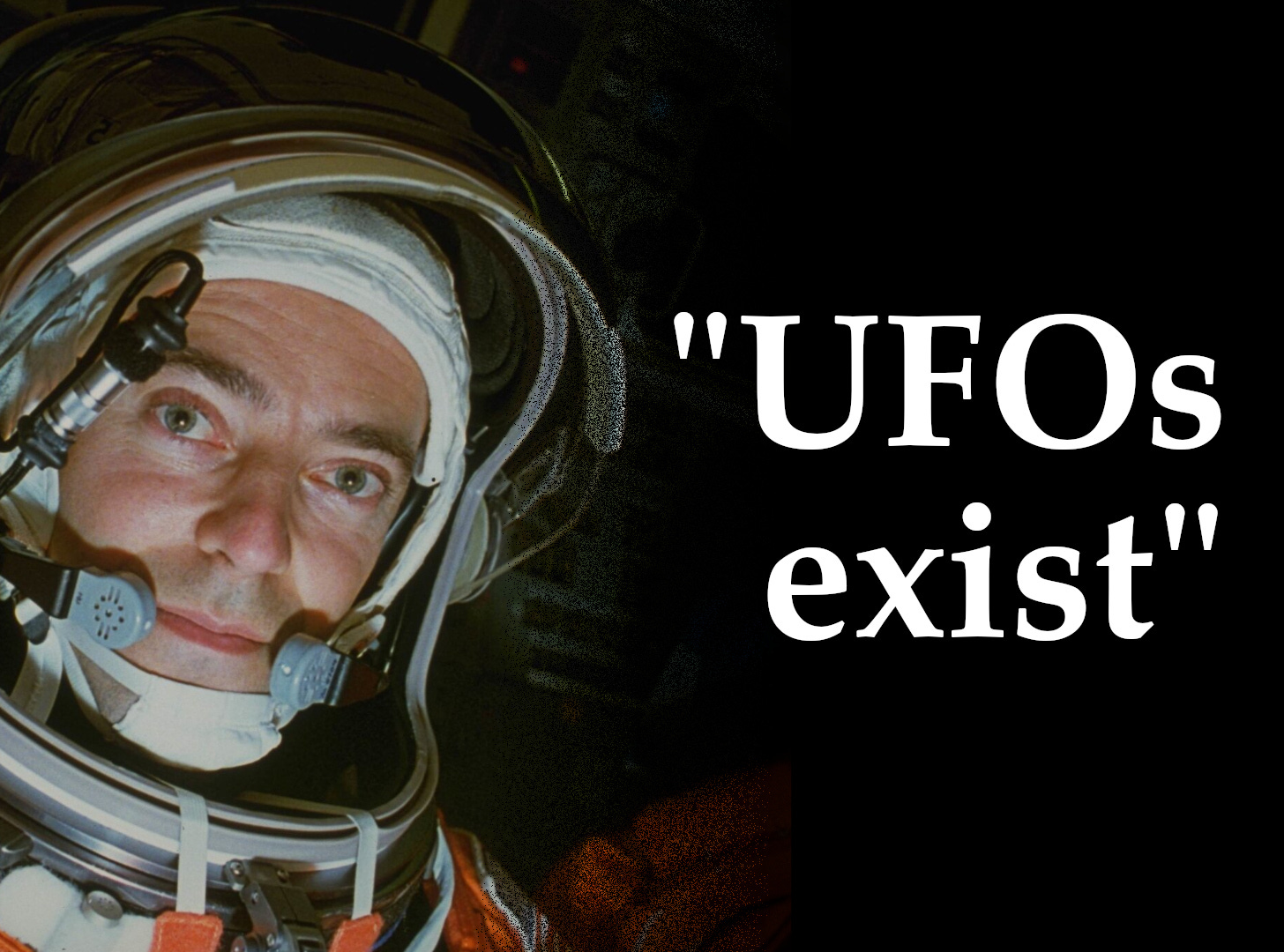
We’re also asked, “Do you believe in UFOs?” Well, first of all, it’s not a matter of belief. Within this question, there are actually two questions.
One is the UFO phenomenon, which we now call a UAP (unidentified aerial phenomenon), which can sometimes manifest as a visible object. At other times, it is a luminous phenomenon, for example.
The phenomenon is a proven fact. UFOs exist.
There are a few cases where we have sufficient eyewitness accounts from people on the ground, pilots in aircraft and radar traces, even if they are not very numerous. The phenomenon has occurred.
He then attempted to address the intriguing question of defining its origin:
Are they extraterrestrial intelligences or not? While that’s the simplest explanation, it’s also the least likely. We really need to consider both possibilities, don’t we? If we want to come up with an explanation using our limited imagination, we have to conjure up some very convoluted scenarios. However, it’s probably not extraterrestrial intelligence. Nevertheless, the search for extraterrestrial life is a very serious matter and the primary scientific objective of solar system exploration missions today.
Clervoy’s answer unveils a very interesting conundrum. NASA’s scientific priority is to search for evidence of life beyond Earth. Given the age of the universe, it is reasonable to assume that life could have originated elsewhere, with millions of years of technological development potentially allowing for significant advancements in propulsion. Therefore, alien lifeforms may already be here, and we would see them as incredibly advanced spacecraft, or perhaps even forms of travel that we don’t yet understand.
The problem arises when we consider the scientific study of extraterrestrial life. Billions of dollars have been invested in telescopes to look further and further into space and time without ever considering that these objects may already be here. While Project Sign/Saucer concluded that extraterrestrials were the most likely explanation, it was subjected to a disinformation campaign by the US government. If a study could prove beyond doubt that extraterrestrial craft are already here, it would immediately render NASA’s current actions (and budget) obsolete. More than a year ago, an independent audit panel on UAPs, financed by NASA with a budget of $100,000, aired its findings, calling for scientific research into UAPs. Since then, however, NASA has done nothing, despite holding satellite intelligence and archives that could be extremely useful.
Therefore, NASA has little incentive to finance research that would render its activities obsolete. Once proof of extraterrestrial life has been obtained and their presence on Earth confirmed, will the public support spending billions of dollars on research looking far into the universe for faint technosignatures? NASA may well have a conflict of interest.
Paul Hill, a NASA engineer, provides the following description:
I was prevented from making any pronouncements about this application of my work by official National Advisory Committee for Aeronautics (NACA) policy. That policy was that flying saucers are nonexistent.
The NACA Director, Dr. Hugh L. Dryden, made a public pronouncement to that effect at about that time, and I had been instructed by my superior in official channels that my name could not be used in connection with my sighting or in any way that would implicate the NACA with these objects.
NACA research officials were all scientists with management training in which the necessity for unambiguous policy had been emphasized. Clearly, I was destined to remain as unidentified as the flying objects. When the name of the organization was changed from NACA to NASA, the National Aeronautics and Space Administration, the same officials remained in charge, and one could notice no change in policy.
The only difference was that individuals were going into space; when astronauts sighted unknowns in space, a grounded official couldn't rationally contradict them. But they could shut them off the air.
In the interview, Clervoy also provides an insight into the discourse surrounding UFOs among astronauts.
We do sometimes talk amongst ourselves about UFOs, unidentified aerial phenomena, Area 51, Roswell and so on. But we’ve noticed that in the United States, it’s a recurring theme that comes up every ten years on average. It’s reported that a very serious officer has made a sensational announcement that he’s seen the objects. But he still can’t reveal them. It’s always the same story, resurfacing roughly every ten years.
No astronaut is certain about this subject. We’re all very much in doubt. We don’t speak out because we don’t know. However, whenever so-called trustworthy figures — high-ranking military officers and colonels — speak in the media, it makes headlines because it sounds serious and comes from a serious person. Ultimately, though, there’s nothing concrete behind it.
It is important to note that there have been numerous attempts to obtain information regarding Unidentified Aerial Phenomena (UAP) since the Second World War. These have included a number of citizen-driven efforts worldwide, often with the support of parliamentarians. Given the culture in academic institutions regarding UAP study, and the various disinformation campaigns orchestrated by US intelligence, it is remarkable that the pressure from witnesses, including those in the highest echelons of society, is still so strong.
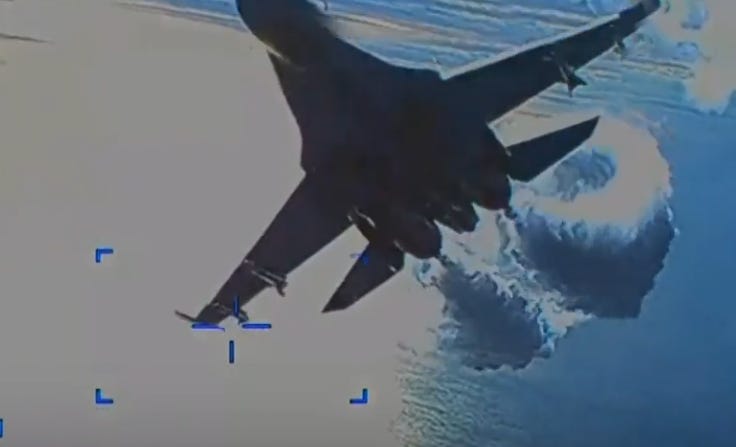
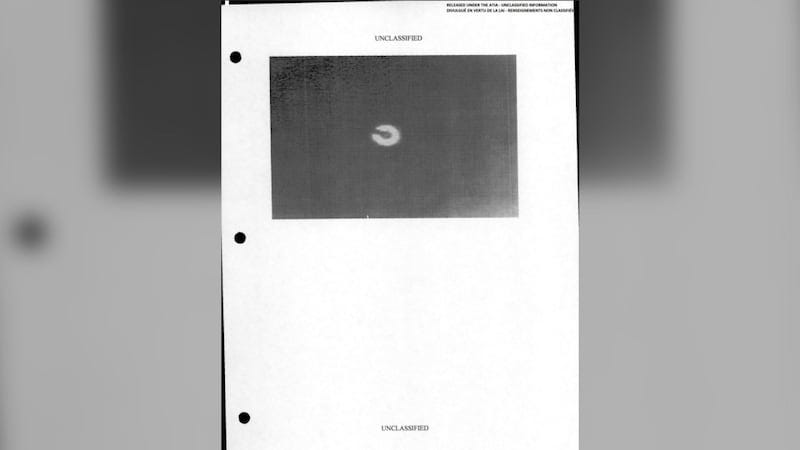
They want definitive answers and clear pictures from the government, which is financed by their taxes. The US demonstrated its ability to declassify clear pictures of enemy aircraft when it suited its communication strategy, while only providing blurred images to the public regarding UAP. US elected officials have recently stated that if the classified briefing were to be made available to the public, there would be no doubt in the population that non-human advanced craft are real.
Later in the interview, Clervoy adds :
So, the key takeaway from all these UFO stories is that the UFO phenomenon — now known as UAP — is a proven fact. However, we still don't know what it is, and we lack the necessary resources and funding to conduct research into it.
Given the significant public interest in the subject, one might question why so few resources have been dedicated to the scientific study of UAP.
Other astronauts have given testimony regarding encounters with UAP. Here is a shortlist based on the work of author Franck Maurin:
In 1951, Donald Kent Slayton witnessed a sphere.
In 1951, Gordon Cooper witnessed several UFOs.
In 1957, Gordon Cooper witnessed disks above Germany.
In 1962, Joseph Albert Walker declared that he had filmed UFOs during the 2nd NCPUSR.
In 1962, Robert White encountered strange objects.
In 1978, Pavel Popovitch observed a white rectangular object.
In 1965, James MacDivitt observed a white cylinder during the Gemini IV mission.
In 1965, Frank Borman and James Lovell observed an unidentified object during the Gemini VII mission.
In 1966, during the Gemini IX mission, Charles Conrad and Richard Gordon observed a large, tumbling object.
In 1969, during Apollo XI, Buzz Aldrin observed an L-shaped object.
In 1969, during Apollo XII, Pete Conrad, Alan Bean and Richard Gordon observed several luminous objects.
In 1981, on Salyut 6, Vladimir Kovalyonok observed a sphere.
In 2008, in an interview with Gardianul, Dimitru Prunariu explained that astronauts who reported UFOs would have their missions cancelled.
While the stigma surrounding UFO reports by pilots is well known, one can only imagine the social pressure on astronauts preparing for a lifetime for a chance to reach space. Nevertheless, one of the few exceptions, and one of the most prominent supporters of UAP study was astronaut Edgar Mitchell, the sixth man on the moon. Dr Diana Walsh Pasulka recounts the following:
He explained that there are some people on Earth who are in contact with the good extraterrestrials, and that they have missions to accomplish, sometimes in secret. He believed (like Tyler and James) that some extraterrestrials had left advanced technologies that certain scientists can unlock and use for the good of humans and the world. He said that we have already benefited from this technology.
In this new space age, with a new space race between China and the United States, one can only wonder whether astronauts will be free to describe what they see in space.